Where & When to See Basking Sharks in Ireland
Discover where and when to see basking sharks in Ireland, the best months and hotspots, plus 5 wildlife boat tours where you may encounter these incredible sharks.
Seeing a basking shark off the Irish coast is one of those wildlife encounters you never really forget.
Despite their enormous size and slightly alarming appearance, basking sharks are gentle filter feeders that cruise through the water eating tiny zooplankton.
They are the second-largest fish in the world, and Ireland is one of the best places in Europe to see them close to shore during spring and summer.
From the Blasket Islands and Loop Head to Achill, the Aran Islands and Malin Head, there are several stretches of coast where sightings are particularly common.
Here is everything you need to know about when and where to see basking sharks in Ireland, plus some wildlife boat tours where you may be lucky enough to encounter one.
When Can You See Basking Sharks in Ireland?
The Irish basking shark season generally runs from late March or April through to September.
Basking sharks are most frequently seen around Ireland from April to September, although animals can begin appearing as early as late March.
For many visitors, April, May and June are excellent months to look for them along the west and southwest coast.
However, there is no fixed timetable.
Basking sharks follow concentrations of zooplankton, so their movements can change dramatically depending on sea temperature, currents and food availability.
Some years produce large numbers early in spring, while other seasons have major activity later in summer.
What is the Best Weather for Spotting Basking Sharks?
Calm weather gives you the best chance.
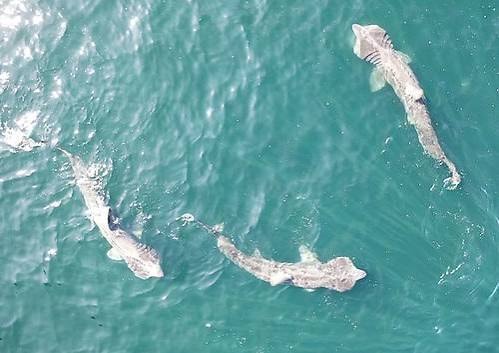
Basking sharks often feed close to the surface, where their large dorsal fins and sometimes the tip of their tail can be seen cutting through the water.
On a calm day, these fins can be remarkably easy to spot.
When the sea becomes rough, even a very large shark can disappear among the waves.
A sunny day isn't essential, but light winds and calm sea conditions make a huge difference.
If you're planning a dedicated wildlife trip, give yourself a couple of days rather than relying on one particular morning.
1. Blasket Islands and Dingle Peninsula, County Kerry
The waters around the Blasket Islands and western Dingle Peninsula are among Ireland's best-known basking shark locations.
The productive Atlantic waters surrounding the islands provide excellent feeding grounds for a huge variety of marine wildlife.
Good areas to watch include Slea Head, the Blasket Islands, Dingle Bay and Great Blasket Island.
Boat trips operating from Dingle and Ventry sometimes encounter basking sharks alongside dolphins, seals, whales and seabirds.
But you don't necessarily need a boat.
During good conditions, sharks can occasionally be seen from elevated coastal viewpoints around Slea Head.
Best time: Spring into early summer.
2. Achill Island, County Mayo
Achill has a fascinating history with basking sharks.
The island was once associated with one of the world's best-documented basking shark fisheries, but today the focus is thankfully on conservation and wildlife watching.
The waters around Achill remain an important area for the species.
Sightings are particularly possible around the outer coastline and sheltered waters where plankton gathers.
Achill's high cliffs and coastal roads also provide some excellent land-based viewing opportunities.
Bring binoculars and scan the sea for large triangular dorsal fins moving slowly at the surface.
Best time: April to June, although sightings can occur later.
3. Inishowen and Malin Head, County Donegal
The waters around Inishowen and Malin Head are another major basking shark hotspot.
Malin Head and the wider Donegal coast regularly produce spring sightings when feeding conditions are right.
Because much of the coastline is elevated, Donegal can be particularly good for watching from land.
Try scanning from safe coastal viewpoints on calm days.
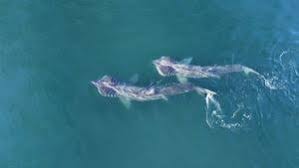
If you're lucky, you may see more than one shark feeding together.
Best time: Spring and early summer.
4. Loop Head and West Clare
The coastline around Loop Head, Kilkee and West Clare can produce spectacular basking shark encounters.
Large groups have previously been recorded feeding close to shore between Loop Head, Kilkee, Spanish Point and further north along the Clare coast.
From elevated cliffs and headlands, you may be able to spot dorsal fins without ever setting foot on a boat.
Loop Head has also become an important area for researchers studying basking shark behaviour.
Best time: April and May are traditionally strong, although later summer sightings are possible.
5. Aran Islands, County Galway
The waters around the Aran Islands are another excellent area to watch.
Sharks are regularly recorded around Ireland's offshore islands, where currents can concentrate the plankton they feed on.
If you're travelling to Inis Mór, Inis Meáin or Inis Oírr during spring, keep an eye on the sea during the ferry crossing.
You never know what might appear beside the boat.
Best time: Spring and early summer.
6. Inishbofin and the Mayo-Galway Islands
The islands off northern Galway and Mayo are particularly interesting for basking shark activity.
Sightings have been recorded around Inishbofin, Inishark, Clare Island, Iniskea Islands and Achill.
These island waters can create favourable feeding conditions when plankton becomes concentrated around tidal fronts and sheltered coastlines.
This region can be especially productive during years when sharks arrive early.
Best time: March through May can be particularly interesting.
7. Beara Peninsula, County Cork
The Beara Peninsula is another excellent place to keep watch.
Historic and modern records show regular spring sightings around Ireland's southwest coast, including the Beara Peninsula.
Elevated viewpoints around the peninsula can be useful because basking sharks often travel close to shore while feeding.
West Cork and Kerry also tend to be among the first parts of Ireland where sharks are reported at the beginning of the season.
Best time: March to May.
8. West Cork
The waters off West Cork are some of Ireland's richest for marine wildlife.
Basking sharks are among the species that can appear here during the warmer months alongside dolphins, minke whales, humpback whales, fin whales, seals and sunfish.
Areas around Baltimore, Roaringwater Bay and Courtmacsherry all offer wildlife boat tours.
A basking shark sighting is never guaranteed, but during a productive spring or summer you could encounter an incredible variety of marine wildlife on the same trip.
5 Boat Tours Where You Might See Basking Sharks in Ireland
There are no boat tours that can genuinely guarantee you'll see a basking shark.
They are wild animals moving over huge distances depending on food, weather and sea conditions.
However, several Irish wildlife-tour operators work in areas where basking sharks are regularly encountered.
Here are five worth checking.
1. Blasket Islands Eco Marine Tours – Ventry, County Kerry
Operating from Ventry on the Dingle Peninsula, Blasket Islands Eco Marine Tours specialises in marine wildlife trips around the Blasket Islands.
Their tours can encounter basking sharks, minke whales, dolphins, grey seals, puffins and other seabirds.
Their morning sea safari and longer whale-watching trips specifically travel through areas where basking sharks can appear during the season.
The Blaskets are already one of Ireland's best basking shark areas, making this one of the strongest options if shark spotting is high on your wish list.
Location: Ventry, County Kerry. Best time for basking sharks: Spring and early summer.
Book Now – Blasket Islands Eco Marine Tours
2. Donegal Sea Adventure – Burtonport, County Donegal
Donegal Sea Adventure operates from Burtonport Harbour on Donegal's Wild Atlantic Way.
Their sea safari explores the islands and rugged coastline around The Rosses.
Wildlife that may be encountered includes basking sharks, dolphins, whales, seals and seabirds.
The main Sea Safari lasts around one hour and 40 minutes and combines wildlife spotting with the area's scenery, geology and island history.
Location: Burtonport, County Donegal. Best time: Spring through summer.
Book Now – Donegal Sea Adventure
3. Sliabh Liag Boat Trips – Teelin, County Donegal
Another excellent Donegal option is Sliabh Liag Boat Trips.
Tours leave from Teelin Pier and travel beneath the enormous Sliabh Liag cliffs.
Along the way you may encounter basking sharks, dolphins, whales, seals, puffins and other seabirds.
Basking sharks are particularly associated with the area during April and May, when they can sometimes be seen feeding at the surface.
Even if you don't see a shark, seeing the Sliabh Liag cliffs from sea level makes this a spectacular trip in its own right.
Location: Teelin, County Donegal. Best time for basking sharks: April and May.
Book Now – Sliabh Liag Boat Trips
4. Whale Watch West Cork – Baltimore, County Cork
Operating from Baltimore, Whale Watch West Cork offers longer marine wildlife trips into some of Ireland's richest waters.
Species encountered can include basking sharks, minke whales, fin whales, humpback whales, common dolphins, bottlenose dolphins, harbour porpoises, sunfish and seals.
Basking sharks appear at different points throughout the wildlife-watching season.
The company also follows wildlife-watching guidelines designed to reduce disturbance to the animals.
Location: Baltimore, West Cork. Best time for basking sharks: Spring and summer.
Book Now – Whale Watch West Cork
5. Atlantic Whale & Wildlife Tours – Courtmacsherry, County Cork
Atlantic Whale & Wildlife Tours operates marine wildlife trips from Courtmacsherry in West Cork.
The area's productive waters attract a huge range of marine species.
Depending on the season, trips may encounter basking sharks, humpback whales, fin whales, minke whales, common dolphins, harbour porpoises, sunfish and seabirds.
The company reports encountering basking sharks during the summer months, sometimes with several animals feeding in the same area.
Location: Courtmacsherry, County Cork. Best time: Spring into summer.
Book Now – Atlantic Whale & Wildlife Tours
Important: No Tour Can Guarantee a Basking Shark
This is worth repeating.
Don't book any wildlife tour expecting a guaranteed basking shark encounter.
They aren't kept in one particular bay and nobody knows exactly where they will be on a given day.
Their movements depend largely on plankton and sea conditions.
Instead, book a marine wildlife tour.
That way a basking shark becomes the incredible bonus.
Even if one doesn't appear, you could still see dolphins, seals, porpoises, whales, puffins and some spectacular stretches of Irish coastline.
Can You See Basking Sharks From Land?
Absolutely.
In fact, watching from land can be one of the least intrusive ways to see them.
Look for high coastal viewpoints where you have a wide view over calm water.
Good areas include Slea Head, Malin Head, Loop Head, Achill Island, the Beara Peninsula and the West Clare cliffs.
Use binoculars and watch for a large dorsal fin moving slowly and steadily through the water.
Sometimes you'll see a second smaller fin behind it — that's the tail.
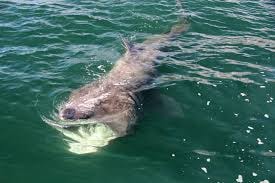
If the shark is feeding at the surface, you may even see its enormous open mouth.
What Do Basking Sharks Look Like?
Basking sharks are huge.
Adults can grow several metres long, and their size can initially make them look intimidating.
But they're harmless filter feeders.
Their most obvious features are a large triangular dorsal fin, a huge open mouth, a long body, dark grey or brown colouring, large gill openings and slow movement near the surface.
Their mouth can look enormous because they swim through plankton-rich water with it wide open.
They aren't hunting fish, seals or people.
They're filtering tiny organisms from the sea.
Are Basking Sharks Dangerous?
Basking sharks are not considered a threat to humans.
They don't hunt large prey and instead feed by filtering plankton from seawater.
However, they are still enormous wild animals.
Never deliberately approach, touch or swim towards one.
Give them space and let the shark decide where it wants to go.
Basking Sharks Are Protected in Ireland
Basking sharks have been legally protected in Ireland since 2022.
They are protected under Irish wildlife legislation, making it illegal to intentionally hunt, injure or interfere with them.
The protection is particularly important because basking shark numbers suffered enormously due to historic hunting.
Today, seeing them return to Irish waters each spring is something worth protecting.
How to Watch Basking Sharks Responsibly
If you are lucky enough to see one, the best thing you can do is enjoy the moment without interfering.
Keep your distance. Don't chase sharks in a boat. Don't swim towards them. Don't attempt to touch them. Avoid surrounding them with multiple boats or kayaks.
If you're on a wildlife tour, choose an operator that follows responsible wildlife-watching guidelines.
The quieter the encounter, the more natural behaviour you're likely to see anyway.
How to Improve Your Chances of Seeing One
Visit during spring. April and May are particularly good months historically.
Choose calm weather. Sharks are much easier to spot on a flat sea.
Find elevated ground. Cliffs and headlands provide a huge viewing area.
Use binoculars.
Watch recent sightings. Wildlife organisations and local tour operators often share recent activity.
Book more than one day in the area. Weather can change quickly.
Be patient. Wildlife doesn't run to a timetable. Sometimes you can stare at an empty sea for two hours and then suddenly see three dorsal fins appear at once. That's half the fun.
Best Time to See Basking Sharks in Ireland
As a rough guide: late March brings early arrivals; April is one of the strongest months; May is excellent in many years; June is still a very good possibility; July and August sightings continue around different parts of the west coast; September is still possible, although sightings generally become less predictable.
If basking sharks are the main reason for your trip, aim for April or May and spend a few days somewhere along the west coast.
Report Your Basking Shark Sighting
If you are lucky enough to see a basking shark, consider reporting it.
Sightings submitted by members of the public can help researchers understand where sharks are travelling, feeding and gathering around Ireland.
Make a note of the location, date, approximate time, number of sharks, direction of travel and any interesting behaviour.
Photographs can also be useful, but never disturb a shark simply to get a better picture.
Final Thoughts
Seeing a basking shark along the Irish coast is a reminder of just how extraordinary our marine wildlife can be.
These enormous animals can grow to the size of a small bus, yet quietly cruise past cliffs and islands feeding on some of the tiniest creatures in the sea.
And you don't necessarily need an expensive boat trip to see them.
On the right spring morning, you could be standing on a headland in Kerry, Clare, Mayo or Donegal and suddenly spot that unmistakable dorsal fin moving slowly through the water below.
If you do fancy getting out on the water, wildlife tours operating around Dingle, West Cork and Donegal can give you a chance of seeing basking sharks alongside dolphins, whales, seals and seabirds.
There's never a guarantee.
But that's exactly what makes seeing one so special.
If you're hoping to spot basking sharks in Ireland, plan your trip between April and June, choose a calm day and keep an eye on recent wildlife reports.
And if one appears, give it plenty of space, enjoy the view and consider yourself very lucky.