
Killala Mayo: Things to Do, History & Visitor Guide
Killala
A historic coastal town on Killala Bay — round tower, 1798 Rebellion and some of the quietest scenery in north Mayo.
About
Sitting on the western shores of Killala Bay in north County Mayo, Killala is one of those places that rewards travellers who slow down. It isn't packed with huge attractions. It doesn't have the crowds of Westport. And that's exactly why we like it. Killala is a historic coastal town with a striking round tower, a working harbour, sweeping views across the bay and one of the most dramatic stories of the 1798 Rebellion. French troops landed nearby. Irish rebels gathered here. The short-lived Republic of Connacht emerged. And weeks later, Killala became the scene of one of the bloodiest final actions of the rebellion.
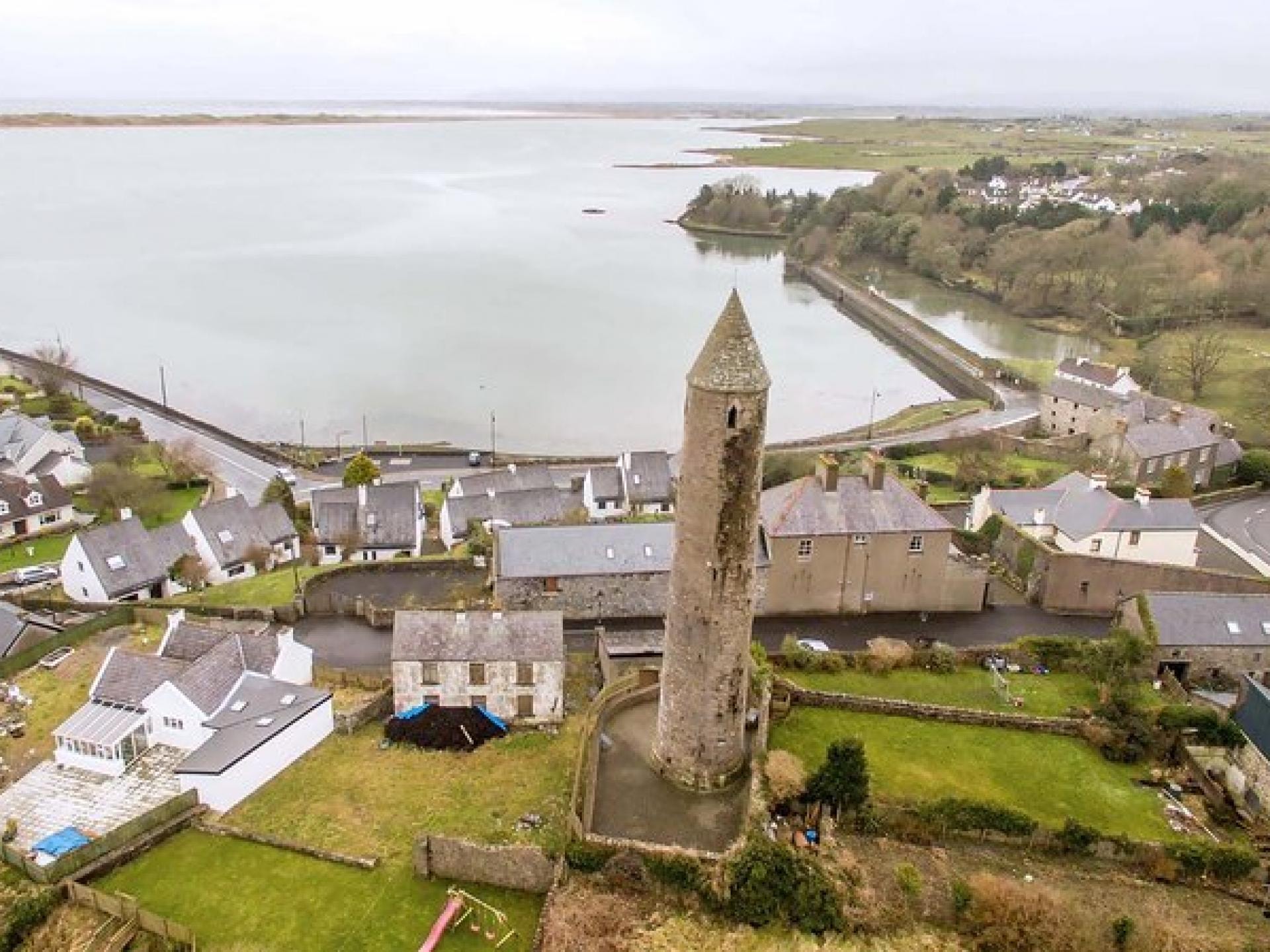
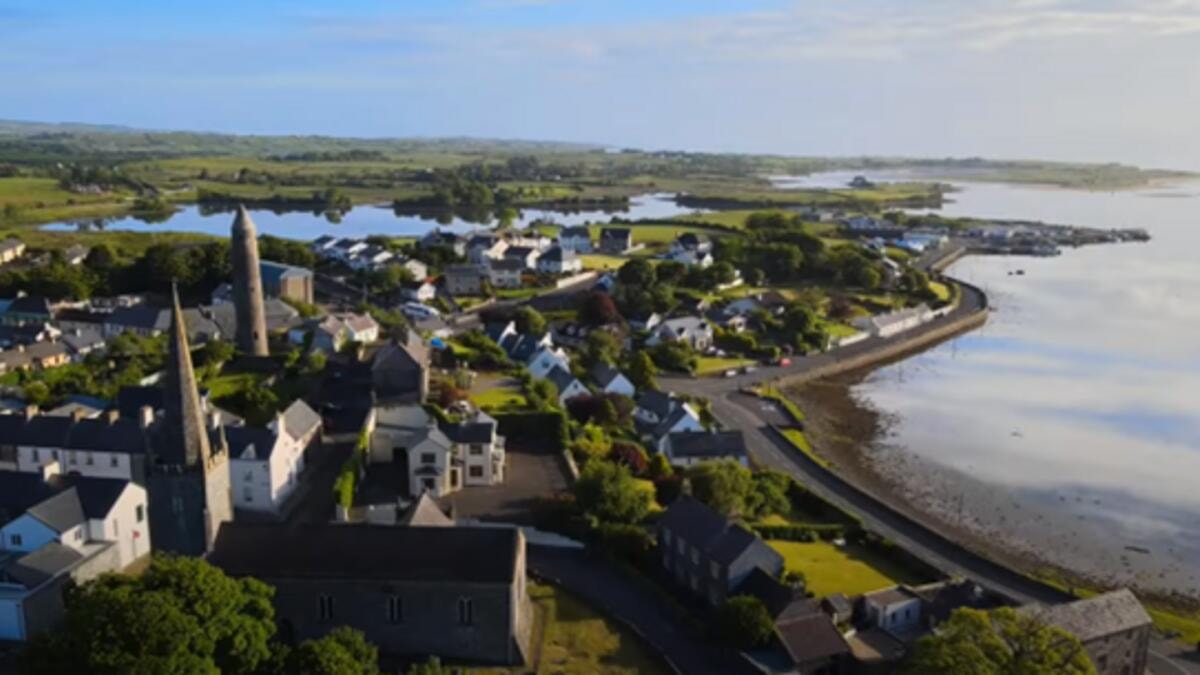
The town's most recognisable landmark is Killala Round Tower, standing on higher ground above the town and dominating the skyline. Round towers were built at important Irish monastic sites, usually between roughly the 9th and 12th centuries, serving as bell towers and highly visible landmarks for religious communities. Killala's tower is one of the most distinctive surviving examples in Mayo. Close by stands St Patrick's Cathedral, part of Killala's long Church of Ireland tradition. Together they form one of the most distinctive historic townscapes in north Mayo — and Killala's history stretches back to the 5th century, when the town is believed to have been founded as a religious settlement.
Killala's most dramatic chapter came in 1798. On 22 August 1798, a French force under General Jean Joseph Amable Humbert landed at Kilcummin, north of Killala. The French had come to support the United Irishmen's rebellion against British rule. Local Irish rebels joined Humbert's force as they advanced through north Mayo, defeating a larger British force at Castlebar in what became known as the Races of Castlebar. A short-lived Republic of Connacht was declared, with John Moore of Moore Hall appointed its president. The story ended brutally on 23 September 1798, when British forces returned to Killala with more than 3,000 troops. The Irish rebels were driven back towards the town and hundreds were killed. One stretch of road into Killala later became known as Casán an Áir — the Pathway of the Slaughter.
The harbour is a lovely place to begin any visit. Killala once served as an important regional port and the town still has a strong maritime character. Fishing boats sit in the sheltered water while the town rises behind them. Take a walk around the harbour, look back towards the Round Tower and you get one of the best views of Killala. It's not a big marina or commercial waterfront — it feels working and local, and that's part of its appeal.
The area around Killala is rich in historical sites. Moyne Abbey, a Franciscan friary standing in a beautiful rural setting close to Killala Bay, has surprisingly substantial ruins — you can still see parts of the church, cloister and domestic buildings. Nearby Rathfran Abbey, a Dominican friary, adds another layer to north Mayo's medieval heritage. You could easily build a small heritage itinerary around Killala, Moyne Abbey and Rathfran before heading north towards the coast.
Continue north and you'll reach Kilcummin Head, close to where Humbert's French troops landed, with dramatic coastal scenery, dunes, grassland and saltmarsh. Further west, Downpatrick Head rises dramatically above the Atlantic near Ballycastle, with the huge sea stack known as Dún Briste standing offshore — one of Mayo's Wild Atlantic Way signature locations. And further still, the Céide Fields preserve one of the most remarkable prehistoric landscapes in Europe, with ancient field systems and settlements dating back thousands of years beneath the blanket bog. Killala therefore works brilliantly as a base for combining 1798 history with prehistoric Mayo and wild Atlantic coastline.
Best Time to Visit
Spring through early autumn is ideal for exploring the wider coastline and historical sites around Killala. You get longer days and better conditions for walking around the harbour and nearby abbeys. But Killala works year-round. Winter gives the bay a completely different atmosphere — the town is quiet, the Atlantic becomes much more dramatic, and you're unlikely to be fighting crowds anywhere.
Getting There
Killala is located in north County Mayo, approximately 14km north of Ballina on the R314 road towards Ballycastle. By car from Ballina, allow around 20 minutes. From Westport, take the N59 north to Ballina and then the R314 — allow around 1 hour 15 minutes. The town itself is small enough to explore on foot, but a car is essential for visiting the surrounding abbeys, beaches and coastal attractions at Kilcummin, Downpatrick Head and Céide Fields.
Insider Tips
Read a little about the 1798 Rebellion before you visit. Without the history, Killala is a pleasant coastal town with a round tower. Once you understand what happened here — the French landing, the Republic of Connacht, the Battle of Killala — the whole place changes.
Allow 2–3 hours for the town itself: the Round Tower, harbour, cathedral and historic centre are close together and easy to explore on foot. Then use Killala as the starting point for a full north Mayo day — Moyne Abbey, Kilcummin and Downpatrick Head make an excellent combination.
Combine Killala with Ballina, just 14km south. Ballina has a much broader range of restaurants and accommodation, and makes a practical base for exploring north Mayo. The drive between the two is short enough to combine easily.
If you've read our Moore Hall guide, the 1798 connection is worth noting — John Moore of Moore Hall was appointed president of the short-lived Republic of Connacht after the French and Irish forces took Castlebar. Two very different parts of Mayo, one extraordinary story.
Highlights
Quick Facts
County
County Mayo
Region
West
Category
towns
More to Explore

Keep exploring