Kinsale Cork: Things to Do, Food & Visitor Guide
Kinsale
Colourful streets, brilliant food and one of Ireland’s finest harbour towns.
About
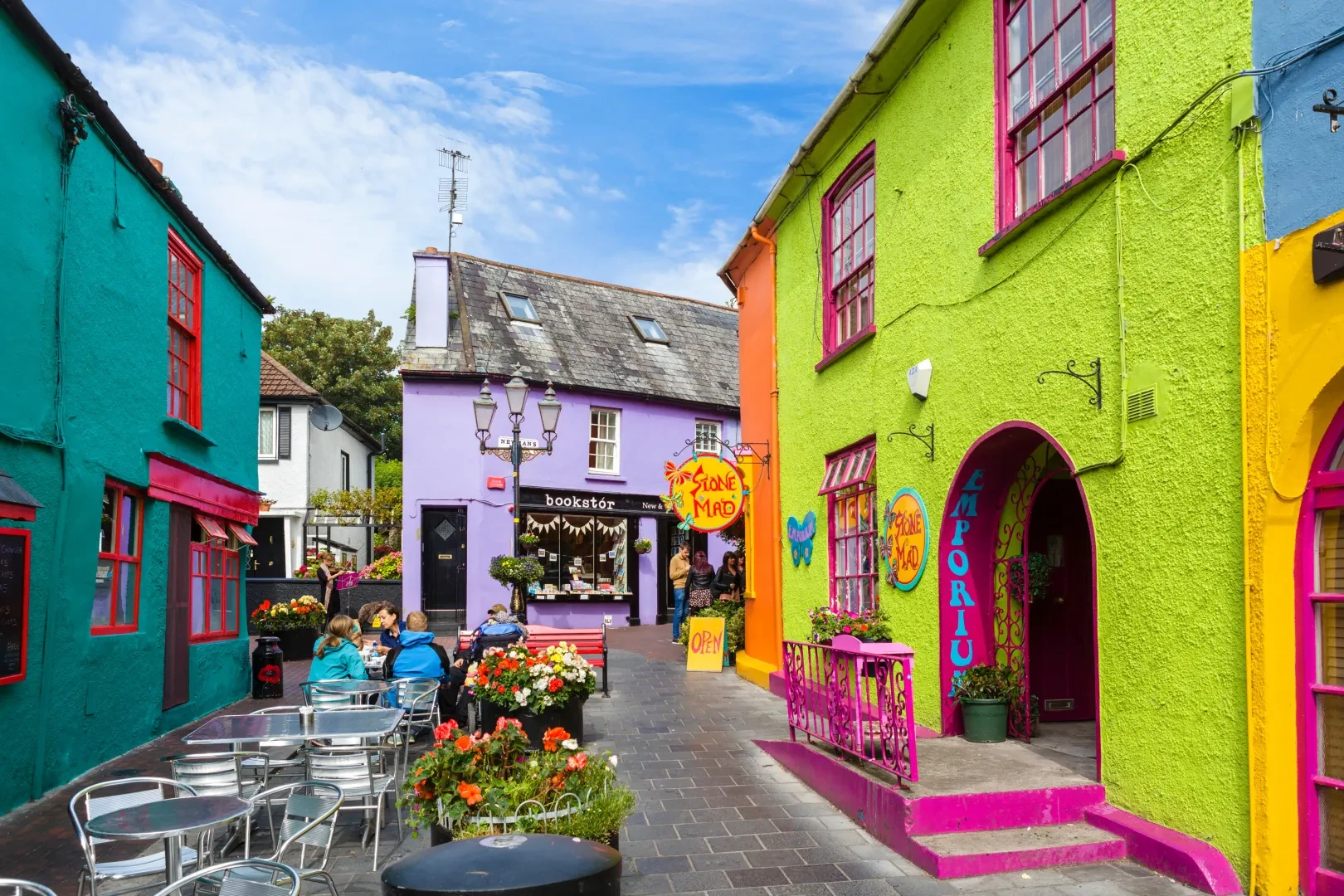
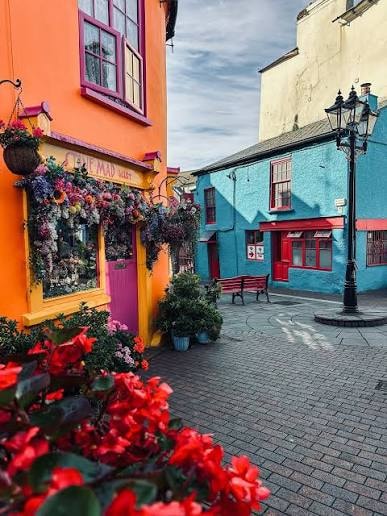
Kinsale sits at the mouth of the Bandon River where it meets the sea, a natural harbour that has shaped the town's character and fortunes for centuries. It is one of the most beautiful small towns in Ireland — a tight cluster of narrow streets rising from the waterfront, lined with brightly painted houses, independent restaurants, and craft shops, with the ruins of Charles Fort visible across the estuary and the masts of sailing yachts reflected in the harbour below. It has been called the gourmet capital of Ireland, and while that title is contested by several other towns, the concentration of excellent restaurants here is genuinely remarkable.
The Battle of Kinsale in 1601 was one of the most consequential events in Irish history. A Spanish fleet landed at Kinsale in support of the Ulster chieftains Hugh O'Neill and Red Hugh O'Donnell, who marched their armies south from Ulster in a desperate winter campaign to join them. The English forces under Lord Mountjoy caught the Irish army between their own lines and the Spanish garrison in the town, and the resulting defeat effectively ended the old Gaelic order in Ireland. The Flight of the Earls followed three years later, and the plantation of Ulster — with consequences that reverberate to this day — began shortly after.
Charles Fort, a star-shaped fortification built by the English in 1677 on the eastern side of the harbour entrance, is one of the largest and best-preserved examples of a classical star fort in Europe. The fort remained in military use until 1921 and was partially burned during the Civil War — the ruins of the barracks buildings within the walls add a melancholy grandeur to the site. The walls and bastions are largely intact, and the views from the ramparts over the harbour, the town, and the Old Head of Kinsale are among the finest coastal panoramas in Cork.
Kinsale's food scene grew from a single event — the Kinsale Good Food Circle, established in 1975 by a group of local restaurant owners who agreed to maintain standards and promote the town as a food destination. The initiative was one of the first of its kind in Ireland and helped establish a culture of quality that has persisted and deepened over the decades. Today the town has more restaurants per capita than almost anywhere else in Ireland, with a particular strength in seafood — the chowder, the oysters, the crab claws, and the fresh fish landed daily at the town pier are the foundation of menus across the town.
The waters around Kinsale have a particular place in maritime history. The Lusitania, the Cunard liner torpedoed by a German U-boat in May 1915 with the loss of nearly 1,200 lives, sank just 18 kilometres off the Old Head of Kinsale — the headland that marks the southern tip of the bay. Many of the victims are buried in the Old Church Cemetery in Kinsale, and the Lusitania Museum at the Old Head tells the story of the sinking and its role in bringing the United States into the First World War. The Old Head itself, a dramatic promontory connected to the mainland by a narrow neck of land, is one of the finest coastal viewpoints in Munster. Kinsale's food scene is one of the best in Munster — the town has more good restaurants per head than almost anywhere in Ireland, and The Bulman at Summercove — a waterside pub just outside the town with views across the harbour — is one of the finest spots for a pint and a plate of seafood in the whole of Cork.
Best Time to Visit
Kinsale works year-round. Summer brings the longest evenings, sailing activity and the biggest crowds — book accommodation and restaurants well in advance in July and August. The Kinsale Gourmet Festival in October is one of Ireland’s oldest food festivals and a brilliant reason to visit in autumn. Spring is colourful and quieter. Winter gives you cosy pubs and restaurants without the peak-season rush.
Getting There
Kinsale is 25km south of Cork City, roughly 30 minutes by car via the R600. Bus Éireann Route 226 connects Cork City, Kent Station, Cork Airport and Kinsale, with Route 228 (Kinsale Connect) providing an additional link from Cork City — journey times are typically 40–60 minutes. Cork is well connected by train from Dublin (about 2.5 hours) and Cork Airport has flights from across the UK and Europe. Once in Kinsale, the town centre is compact and best explored on foot. Parking is available at the pier and at several car parks on the edge of the centre — during busy summer weekends, arriving early is recommended.
Insider Tips
Stay at least two nights. Kinsale is much better once the day visitors leave — the harbour, the pubs and the restaurants take on a completely different atmosphere in the evening.
Walk to Charles Fort via the Scilly Walk rather than driving. The route from town takes roughly 30–40 minutes each way, passes through Scilly and Summercove with lovely harbour views, and makes the fort a proper half-day outing. Adult admission is €5 at current prices.
Book dinner in advance during summer weekends — Kinsale’s reputation means the best restaurants fill quickly. The town has more good restaurants per head than almost anywhere in Ireland, with a particular strength in fresh seafood.
Drive out to the Old Head of Kinsale, about 20 minutes south of town. The dramatic headland is one of the most distinctive coastal landmarks in Cork and is associated with the sinking of the RMS Lusitania in 1915 — a memorial in Kinsale town commemorates the victims.
Combine Kinsale with a visit to the nearby village of Timoleague, 20km to the west, where a Franciscan friary founded in 1240 stands in atmospheric ruin on the edge of a tidal estuary — one of the most evocative monastic ruins in Munster. And before you leave Kinsale, make time for The Bulman at Summercove — a waterside pub just outside the town with views across the harbour and one of the finest spots for a pint and a plate of seafood in Cork.
Highlights
Quick Facts
County
County Cork
Region
South
Category
Towns & Villages


Keep exploring