Dingle Kerry: Things to Do, Slea Head & Visitor Guide
Dingle
Colourful streets, a working harbour, world-class trad music and one of Ireland's most spectacular peninsulas — Dingle is best enjoyed slowly, with at least two nights.
About
Dingle — Daingean Uí Chúis in Irish — sits on the southwest coast of County Kerry on a peninsula that stretches roughly 48km into the Atlantic, with mountains running down its centre and beaches, cliffs and small villages scattered around the coast. The town sits beside a sheltered harbour and has long been connected with fishing and maritime trade. Today it's one of the main tourism bases on the Wild Atlantic Way. From town you can easily reach Slea Head, Ventry, Dunquin, the Blasket Centre, Gallarus Oratory, Coumeenoole Beach and Conor Pass — then come back into town for dinner and trad music. That balance between wild landscape and lively town is Dingle's biggest strength.
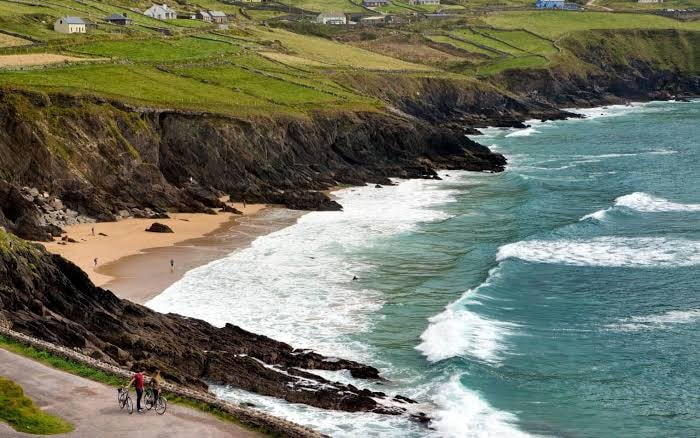
The big one is the Slea Head Drive, which begins and ends in Dingle and loops around the western end of the peninsula. The official Dingle Peninsula tourism body recommends allowing at least half a day — we'd allow longer, because there are too many reasons to stop. Drive clockwise, leaving Dingle towards Ventry, and follow the road signs rather than sat-nav. The first major stop is Ventry beach, a Blue Flag strand popular for walking and swimming. Continue west to the Fahan Beehive Huts — ancient dry-stone clocháns built using the same corbelled technique as Skellig Michael — and Dunbeg Fort, which occupies a dramatic position above the Atlantic. Then you reach Slea Head itself, where the Blasket Islands sit offshore and steep cliffs drop towards the ocean. Just beyond is Coumeenoole Beach, with its extraordinary setting beneath steep cliffs — it featured in Ryan's Daughter and the wider area appeared in Star Wars productions.
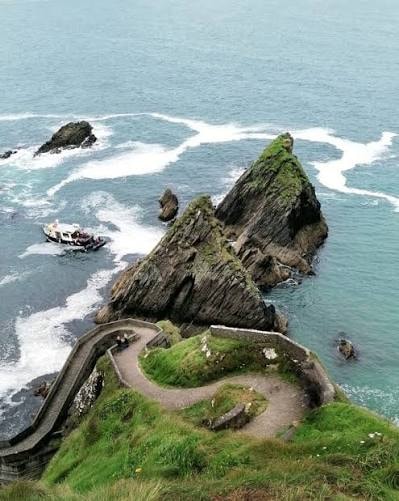
Continue around the coast to Dunquin — Dún Chaoin — one of the most photographed parts of the peninsula. The winding path towards Dunquin Pier has appeared in countless travel photographs, with the Blasket Islands rising behind it. Passenger ferries run from Dunquin to Great Blasket Island during the main visitor season, typically April to October. The island was home to a remarkable Irish-speaking community until its evacuation in 1953, and several islanders became important writers. If you can't make the crossing, the Blasket Centre at Dunquin tells the full story of island life, language and the extraordinary literary tradition that emerged there. From Dunquin the route turns towards Ballyferriter, part of the Gaeltacht where Irish remains a living community language, and then to Gallarus Oratory — a small dry-stone church whose steep walls curve inward like an upturned boat, one of the iconic archaeological sites of the peninsula.
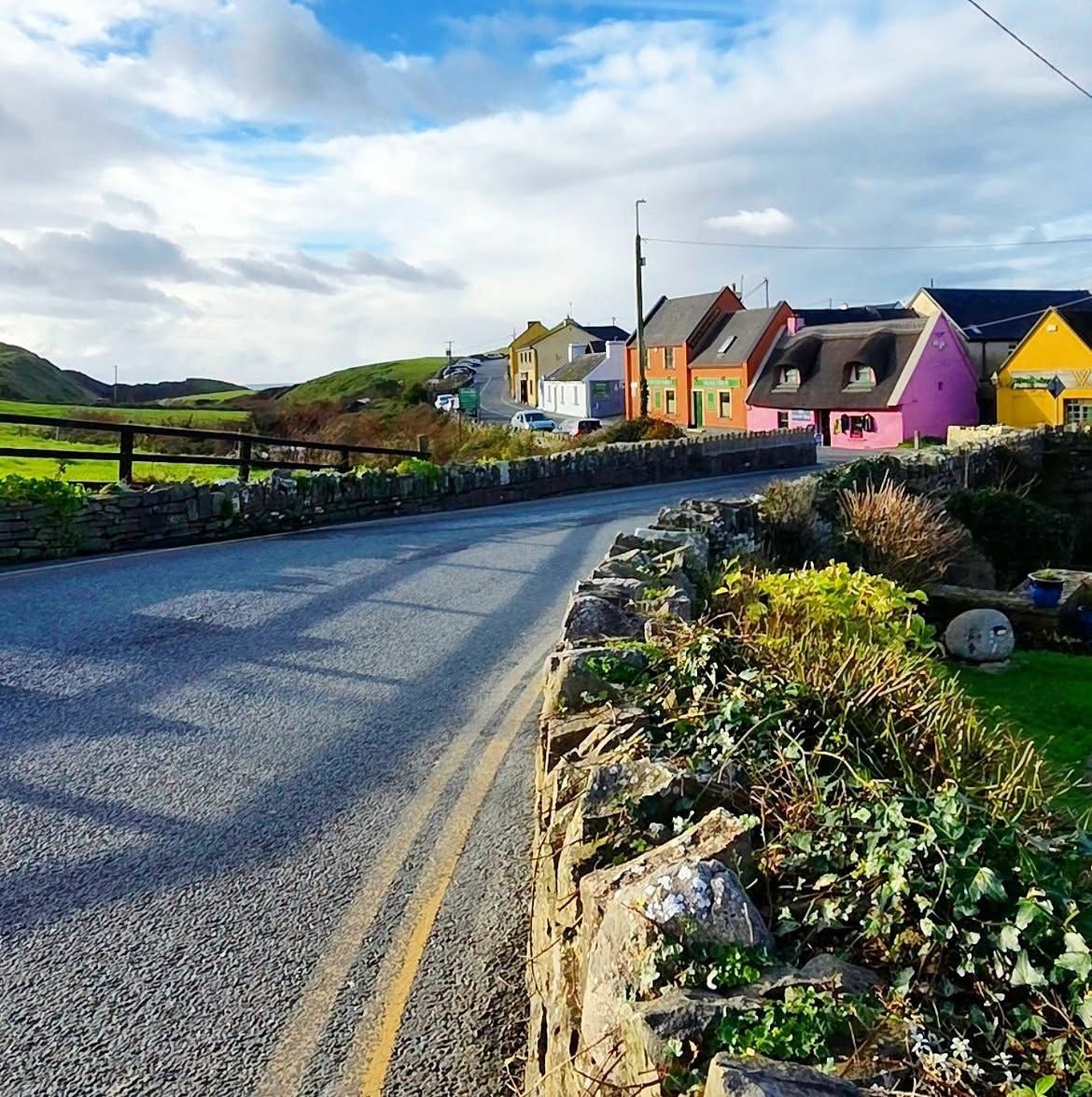
Dingle town itself is compact and easy to explore on foot — colourful shopfronts, traditional pubs, independent cafés, seafood restaurants, craft shops and galleries. The harbour is still a working harbour, with fishing boats alongside tour vessels and the surrounding hills rising behind them. Dingle has developed a seriously good food reputation, with fresh seafood featuring heavily alongside modern Irish cooking, craft beer, whiskey and gin. Dingle Distillery on the edge of town produces Irish whiskey, gin and vodka and has become one of the better-known modern craft distilleries in Ireland. One lesser-known attraction is An Díseart, a former convent containing a chapel with 12 stained-glass windows created by Harry Clarke in 1924, with peaceful walled gardens.
Dingle has a brilliant trad-music scene, with several pubs hosting regular sessions particularly during the main tourism season. The best approach is not to over-plan it — have dinner, walk through town, listen and follow the sound. Some of the best evenings in Dingle happen when you had no idea which pub you were going to end up in. If the weather turns, Dingle Oceanworld Aquarium is one of the best indoor attractions in town, describing itself as Ireland's largest aquarium with sharks, penguins, otters, rays and native Atlantic species. It's open daily 10am–5pm with last admission at 4pm, and adult tickets are €21 online or €22 on the day.
We'd recommend staying at least two nights — three is better. A simple itinerary: Day 1 exploring Dingle town, harbour, Oceanworld and trad music; Day 2 on the Slea Head Drive taking in the Blasket Centre, Dunquin and Gallarus Oratory; Day 3 for Conor Pass, a beach or a walking day. The Conor Pass road crosses the mountains between Dingle and the northern side of the peninsula with views of glacial valleys, lakes and huge mountain scenery — but sections are very narrow, so follow the posted road signage rather than sat-nav. Mount Brandon on the northern side of the peninsula is Ireland's second-highest mountain at roughly 952 metres and a proper mountain hike requiring full preparation. Dingle is also a strong Gaeltacht region where Irish is spoken in homes, schools and businesses — that cultural landscape is every bit as important as the cliffs and beaches.Dick Mack's is one of Dingle's most famous pubs — a legendary combination of pub and cobbler's shop that has been drawing visitors for generations.
Highlights
Quick Facts
County
County Kerry
Region
Munster
Category
towns
More to Explore
Keep exploring