
Doolin Cave, Clare – Great Stalactite, Tickets & Visitor Guide
Doolin Cave
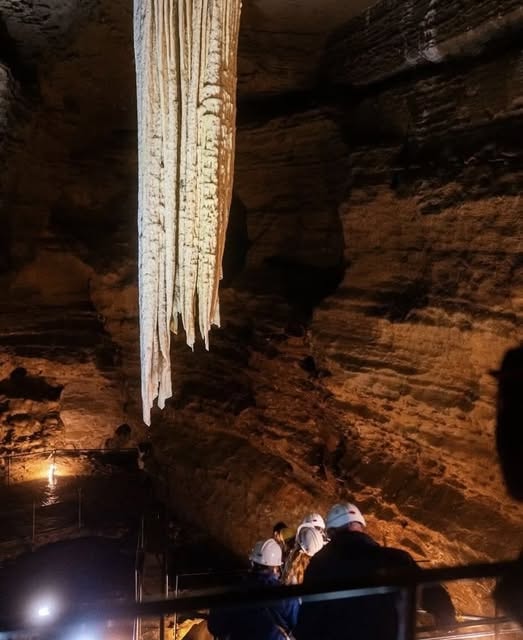
Home to Europe's largest free-hanging stalactite.
About
Hidden beneath the limestone landscape of County Clare, Doolin Cave is home to one of Ireland's most incredible natural wonders — the Great Stalactite, the largest free-hanging stalactite in Europe.
Just a few minutes from the colourful village of Doolin and around 15 minutes from the Cliffs of Moher, this underground cave offers a completely different experience from many of Clare's better-known attractions. Instead of dramatic sea cliffs and Atlantic views, you'll descend nearly 70 feet below ground into an ancient cave where a giant limestone formation has been growing for hundreds of thousands of years.
The cave was formed over 350 million years ago when this part of Ireland lay beneath a warm tropical sea. Layers of limestone gradually built up, creating the landscape now known as The Burren. Later, rainwater slowly dissolved cracks within the limestone, creating underground passages and chambers. The Great Stalactite itself has been growing for an estimated 195,000 years — making it older than modern humans in Ireland. Every drop of water deposits tiny amounts of calcite, and the growth is incredibly slow, often just fractions of a millimetre each year.
Although local people knew about smaller cave entrances, the spectacular chamber containing the Great Stalactite wasn't discovered until 1952 by members of the Bristol University Spelaeological Society. The explorers squeezed through narrow underground passages before entering the vast chamber for the first time. Today visitors take a much easier route.
Every visit is by guided tour. You'll begin with a brief introduction at the Visitor Centre before walking to the cave entrance and descending approximately 125 steps into the cave. The tour lasts around 45–50 minutes, and knowledgeable guides explain how caves form, the Burren's geology, cave formations, the discovery of the Great Stalactite, and the wildlife living underground. The lighting inside is subtle, helping preserve the cave environment while highlighting the formations beautifully.
Many visitors don't realise there's also a lovely nature trail above ground. The short woodland walk explores one of the Burren's rare hazel woodlands, with native trees, wildflowers in spring, birds, limestone outcrops, and views across the surrounding countryside. It's an easy walk and included with admission. Families will also find small farm animals around the visitor area — goats, donkeys, sheep, and chickens — a nice bonus for younger visitors after the cave tour.
Doolin Cave sits within The Burren, one of Ireland's most fascinating landscapes. The Burren is famous for its limestone pavement, rare wildflowers, alpine plants growing beside Mediterranean species, and ancient archaeological sites. The geology above ground is directly connected to what you'll see beneath the surface, making it one of the best places in Ireland to understand how limestone shapes the landscape.
Best Time to Visit
Doolin Cave is open daily from spring through autumn, with reduced winter opening. Spring brings wildflowers in the Burren and quieter tours. Summer offers the longest opening hours and is perfect for a family day out. Autumn means fewer crowds and beautiful woodland colours. Winter is a great rainy-day attraction, but opening days are limited. The cave is one of the best wet-weather attractions in County Clare because the experience is entirely underground regardless of what's happening above. Book online during summer holidays as tours can sell out, particularly in July and August.
Getting There
Doolin Cave is located just outside the village of Doolin in County Clare, along the Wild Atlantic Way. It is well signposted from the R479, and the final stretch is along quiet country roads through the Burren landscape. Doolin village is about 5 minutes away, the Cliffs of Moher around 15 minutes, Lisdoonvarna 10 minutes, and Galway City approximately 1 hour 15 minutes. Parking is free at the Visitor Centre. The cave combines perfectly with a visit to the Cliffs of Moher — visit the cave in the morning when tours are quieter, then spend the afternoon at the Cliffs before heading into Doolin for traditional Irish music.
Insider Tips
Book your tour online in advance during summer — July and August tours can sell out, and arriving without a booking means you may have to wait for the next available slot.
Bring a light jacket or jumper regardless of the weather outside. The cave stays at around 11°C year-round — noticeably cool even on a warm summer day.
Photograph the Great Stalactite from directly underneath to capture its true scale. Use Night Mode on your phone and keep it steady — flash photography may be restricted inside the cave.
Don't skip the nature trail above ground. The Burren hazel woodland is beautiful in its own right and adds another dimension to the visit, particularly in spring when wildflowers are in bloom.
Pair Doolin Cave with the Cliffs of Moher rather than Aillwee Cave. Both are cave experiences, but Doolin's Great Stalactite is completely different — visit the cave in the morning, the Cliffs in the afternoon, and finish with traditional music in Doolin village.
Highlights
Quick Facts
County
County Clare
Region
West
Category
Heritage


Keep exploring