
Dún Briste Mayo: Downpatrick Head Parking & Visitor Guide
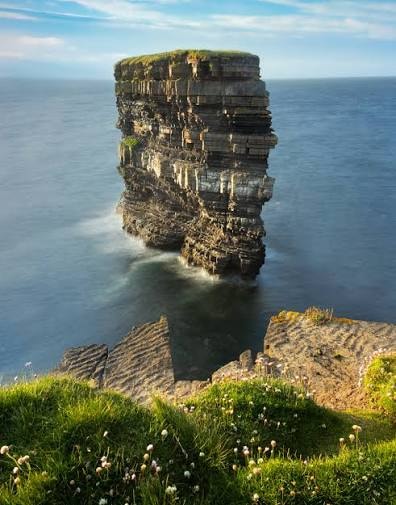
Dún Briste
A 45-metre sea stack standing alone in the Atlantic off Downpatrick Head — one of the most dramatic coastal landmarks on the Wild Atlantic Way.
About
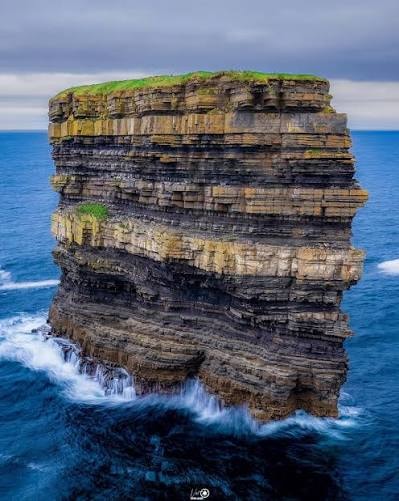
Dún Briste — meaning 'Broken Fort' — stands just offshore from Downpatrick Head in north County Mayo, approximately 5km north of Ballycastle village. The sea stack rises around 45 metres above the Atlantic, its near-vertical sides striped with horizontal rock layers that Discover Ireland says represent different geological periods spanning roughly 350 million years of Earth's history. The rocks around Downpatrick Head form part of an important geological heritage landscape recognised by Geological Survey Ireland. This isn't simply a spectacular coastal formation — it's a giant geological timeline standing in the Atlantic. The stack was once connected to the mainland. Over enormous periods of time, Atlantic waves exploited weaknesses in the coastal rock, caves and arches developed, sections collapsed, and what remained became the isolated sea stack we see today.
Of course, geology isn't the only explanation you'll hear. According to local legend, St Patrick created Dún Briste himself — the story says he struck the ground with his staff after a local chieftain refused to convert to Christianity, and the land split away, leaving the chieftain stranded offshore. The headland surrounding the sea stack is called Downpatrick Head, and Discover Ireland records an early Christian tradition connecting the site with St Patrick, including a former church, holy well and stone cross. Mass is still celebrated here each year on Garland Sunday, traditionally held on the final Sunday in July — a long-standing local pilgrimage tradition that shows this remains a living heritage landscape rather than simply another scenic stop.
Downpatrick Head has more to offer than the sea stack alone. Poll na Seantainne is an enormous blowhole that opens through the top of the headland — Atlantic waves enter sea caves beneath the cliffs, and under the right conditions water and air surge violently through openings in the rock. A dedicated viewing area allows visitors to see the feature more safely. A modern artwork called The Crossing was installed at Downpatrick Head in 2014, positioned around the clifftop blowhole as part of the North Mayo Sculpture Trail. Look farther out to sea and on a clear day you may spot the Stags of Broadhaven — rocky islands rising dramatically from the Atlantic off the north Mayo coastline. The surrounding cliffs also provide important nesting habitat for seabirds including puffins, kittiwakes and cormorants. Dún Briste itself has become a relatively protected refuge because terrestrial predators can't easily reach it.
The visit itself is straightforward. Discover Ireland recommends allowing around 30 minutes to one hour for a normal visit — this is essentially a short coastal headland walk from the arrival area towards the viewpoints, not a serious hike. There is no conventional admission charge and no need to book a timed entry or guided tour. Parking is available close to the main Wild Atlantic Way access area. That said, this is exposed Atlantic headland terrain: expect grass, uneven ground, possible mud and wind. Wear sensible footwear. And the most important rule at Downpatrick Head: stay well back from cliff edges. This is an actively eroding Atlantic coastline — edges can be unstable, grass can hide sudden drops, and strong gusts can arrive with very little warning. Keep children extremely close and don't climb fences or barriers for photographs. Dún Briste looks just as impressive from the safe side.
Dún Briste sits naturally within a wider north Mayo day. The obvious combination is Céide Fields — Discover Ireland specifically recommends visiting it after Downpatrick Head and describes it as just a short drive away. The archaeological landscape contains exceptionally old field systems and megalithic remains beneath the north Mayo bog, giving you a brilliant contrast: at Dún Briste you're looking at hundreds of millions of years of geology; at Céide Fields you're looking at thousands of years of human history. Continuing east brings you to Killala, with its distinctive round tower and rich history — making a natural north Mayo route of Killala → Ballycastle → Downpatrick Head → Céide Fields. Continue west and the landscape becomes increasingly remote as you head towards Belmullet, the Mullet Peninsula and Erris Head — one of Ireland's least crowded coastal regions.
Best Time to Visit
Downpatrick Head works year-round. Spring is great for quieter conditions and returning seabirds — puffins are more likely to be present from late spring through summer. Summer offers the longest daylight and the best chance of favourable weather, though it's also the busiest period. Autumn brings fantastic light and dramatic Atlantic conditions. Winter is very wild and atmospheric, but the exposed headland can be considerably less comfortable in bad weather. For photography, late afternoon or early evening can be beautiful when the light catches Dún Briste's layered rock. Atlantic weather changes quickly — bring a waterproof layer even when conditions initially look reasonable.
Getting There
Downpatrick Head is located approximately 5km north of Ballycastle village on the north Mayo coast — don't confuse this Ballycastle with Ballycastle in County Antrim. Downpatrick Head is one of the major Wild Atlantic Way discovery points in north Mayo. Visitor parking is available close to the main access area. There is no conventional admission charge. For food, toilets and broader facilities, Ballycastle village is the practical base before heading onto the headland.
Insider Tips
Stay well back from cliff edges at all times. Downpatrick Head is an actively eroding Atlantic coastline — edges can be unstable, grass can hide sudden drops, and strong gusts can arrive with very little warning. Don't climb fences or barriers for photographs. Dún Briste looks just as impressive from the safe side.
Don't stop after photographing Dún Briste. Walk farther around Downpatrick Head to find the viewing area for Poll na Seantainne blowhole, then look out towards the Stags of Broadhaven. Give yourself around an hour rather than treating the headland as a five-minute photo stop.
Combine with Céide Fields. Discover Ireland specifically recommends visiting Céide Fields after Downpatrick Head — it's a short drive away and gives you a brilliant contrast between 350 million years of geology at Dún Briste and thousands of years of human history at Céide Fields.
Wear sensible footwear. The walk is short but this is exposed Atlantic headland terrain — expect grass, uneven ground, possible mud and wind. After prolonged rain, waterproof walking shoes are a much better idea than pristine white trainers.
Bring binoculars if birdlife interests you. Dún Briste and the surrounding cliffs provide nesting habitat for puffins, kittiwakes and cormorants. Puffins are seasonal — late spring and summer offer the better chance — but don't assume they'll be close enough for a phone camera.
Highlights
Quick Facts
County
County Mayo
Region
West
Category
Coastal


Keep exploring