
Poolbeg Lighthouse Dublin: Walk, Parking & Visitor Guide
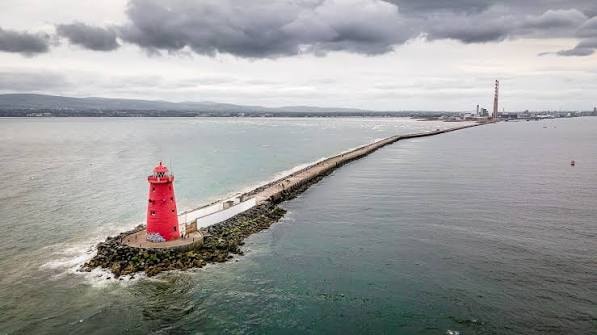
Poolbeg Lighthouse
At the end of the Great South Wall in Dublin Bay — a free coastal walk past working ships, 18th-century maritime engineering and one of Dublin's most iconic red landmarks.
About
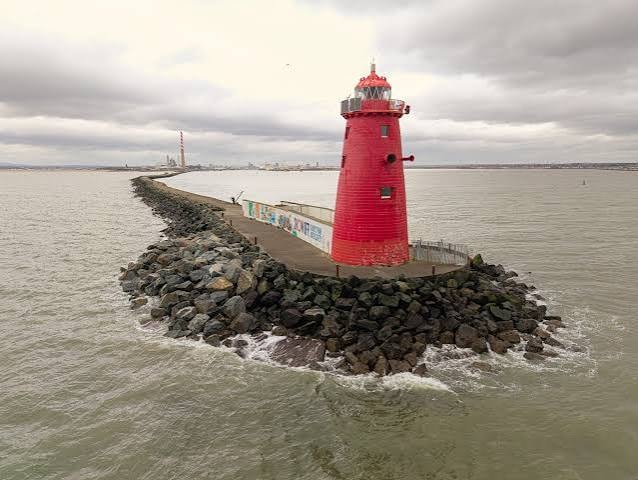
Poolbeg Lighthouse stands at the eastern end of the Great South Wall in Dublin Bay, southeast of Dublin city centre beyond Ringsend and the Poolbeg Peninsula. Although it feels surprisingly remote once you're walking out along the wall, you're still remarkably close to central Dublin — one minute you've got city traffic, not long afterwards you're surrounded by open water and huge ships. The lighthouse is completely free to visit: no tickets, no tour, no booking and no entry time. Discover Ireland lists Poolbeg among Dublin's free attractions. The first Poolbeg Lighthouse was lit on 29 September 1767, replacing an earlier floating light used to guide ships entering the harbour. The present structure dates from around 1820. Poolbeg remains an active navigational aid operated by Dublin Port — this is not a visitor lighthouse like Fanad Head or Hook Lighthouse, so the normal experience is the walk and the exterior rather than a tower tour or visitor centre. There was an important temporary closure earlier in 2026: Storm Bram caused significant damage to the rock armour protecting the Great South Wall, leading Dublin Port to undertake a €2.5 million repair project placing around 5,000 tonnes of new rock armour. On 23 March 2026, Dublin Port confirmed the roundhead beside Poolbeg Lighthouse had fully reopened to the public. As of October 2026, normal pedestrian access is available — though Dublin Port can temporarily close the wall during severe weather.
The walk to Poolbeg is along the Great South Wall, and the wall is arguably as historically important as the lighthouse itself. Work began in 1716 as Dublin attempted to deal with serious problems caused by sand and silt blocking the entrance to the River Liffey. Dublin Port describes the Great South Wall as having been built between roughly 1720 and 1795, extending for almost 5km — described as Ireland's longest public monument and, when completed, regarded as one of the world's great maritime engineering projects. For a time it was the longest seawall in the world. The wall was constructed to help channel the river: by concentrating tidal flow, the engineering works helped scour sediment from the shipping channel and maintain deeper access for vessels entering Dublin Port. So while you're walking along what feels like a giant coastal promenade, you're actually standing on working national infrastructure. If you start near the Great South Wall car park, Discover Ireland describes the standard walk as approximately a 4km loop — allow 45 minutes to 1 hour walking briskly, or 1–1½ hours if you're stopping for photographs and views. For a much longer walk, begin around Sandymount Strand: Ireland.com describes the broader route through the Poolbeg Peninsula as a little over 10km, passing through Irishtown Nature Park before reaching the Great South Wall and lighthouse. Allow around two hours or more for that route.Guinness Storehouse is one of Dublin's most visited attractions and makes a natural pairing with Poolbeg — both show you different sides of Dublin's relationship with the sea and industry, and they're easily combined in a single day.
One of the best parts of the walk is watching Dublin Port operating around you. Large ferries, cargo ships, tugs, container vessels and smaller boats all move through the harbour. Poolbeg Lighthouse stands right beside the shipping channel — visit early and you may see morning passenger ferries heading out across the Irish Sea. Turn around during the walk and you'll see another Dublin icon: the twin red-and-white Poolbeg Chimneys dominating the skyline behind you. They belong to the former Poolbeg power station and are among Dublin's most recognisable modern landmarks. The combination of red lighthouse, striped chimneys, ships and Dublin skyline makes this one of the city's most distinctive photography walks. Poolbeg is also surprisingly good for birdlife considering how close you are to heavy port activity — Discover Ireland highlights cormorants, herons and gulls, and the wider Dublin Bay area is internationally important for birds. Sunset is one of the most popular times to walk out, with Discover Ireland specifically recommending Poolbeg for evening light reflected across Dublin Bay. Morning is arguably even better if you want fewer people, and early visits give you a good chance of seeing passenger ships leaving Dublin Port.
About halfway along the wall you'll encounter the Half Moon Swimming & Water Polo Club, founded in 1898 originally under the name Poolbeg Bathers Association. Its unusual name comes from an old military gun battery that once occupied the location — the battery had a semicircular or 'half moon' configuration. Experienced swimmers use the Half Moon area, but this is not a normal sandy beach: you're dealing with deep water, tides, a working port and an exposed coastal wall. Dublin Port launched a new Great South Wall self-guided walking tour through the Dublin Discovery Trails platform in 2026, adding stories about port history, engineering, maritime Dublin and the surrounding landscape — particularly useful for visitors who want to understand what they're actually walking on rather than simply heading straight for the red lighthouse. Dublin Port also unveiled new murals around Poolbeg Lighthouse as part of its 2026 cultural programme, giving you another reason to spend a little time at the far end rather than touching the lighthouse and immediately walking back. Poolbeg sits within the wider Dublin Bay Biosphere — Dublin Port specifically notes the area's UNESCO-designated biosphere status when discussing conservation work around the Great South Wall.
Parking is available near the beginning of the Great South Wall walking section, though it's limited rather than enormous — on sunny weekends and summer evenings, expect it to fill, so go earlier if you're driving. Dublin Port installed dedicated bicycle racks at the start of the Great South Wall in 2023, providing space for up to 12 bicycles, making cycling one of the best ways to visit from central Dublin. The nearest DART station for a longer walking approach is Sandymount. The Great South Wall is made from historic stone and granite — Ireland.com specifically warns that the surface can be uneven underfoot, so wear walking shoes, trainers with decent grip or boots during wet weather. The wall is also extremely exposed: when strong winds and big seas arrive, waves can reach or break over parts of the structure, and Dublin Port closes the wall during sufficiently severe conditions. Keep younger children close — there are open edges, deep water, uneven stones and potentially strong winds. This is not a place to allow toddlers to run freely. Check the weather before you go, and not just whether it's raining: wind is the big factor at Poolbeg, and if barriers are closed, turn around. The lighthouse will still be there tomorrow.
Best Time to Visit
Spring is excellent for walking without peak summer crowds. Summer brings long evenings and spectacular sunset walks, but expect considerably more people during good weather. Autumn is often brilliant for photography — bring layers. Winter is very atmospheric but potentially extremely windy, so check conditions carefully before heading onto the wall. Our favourite is a dry weekday morning with moderate wind: you get the sea air without being personally introduced to every gust arriving from Britain.
Getting There
Poolbeg Lighthouse is at the end of the Great South Wall in Dublin Bay, southeast of the city centre beyond Ringsend. Limited parking is available near the start of the Great South Wall walking section — arrive early on sunny weekends. Bicycle racks for up to 12 bikes are available at the wall entrance. The nearest DART station is Sandymount for the longer 10km+ route through Irishtown Nature Park. Cycling from central Dublin is one of the best options.
Insider Tips
Check the weather before you go — and not just whether it's raining. Wind is the big factor at Poolbeg. The Great South Wall is extremely exposed, and Dublin Port can close it during severe conditions. If barriers are closed, turn around. The lighthouse will still be there tomorrow. The wall had already been closed several times during early 2026 due to storms and safety concerns.
For the easiest visit, drive or cycle towards the Great South Wall and do the shorter approximately 4km loop — allow 1–1½ hours including stops for photographs. For the better experience, start around Sandymount, continue through Irishtown Nature Park and make Poolbeg Lighthouse the turnaround point. Ireland.com describes that longer route as more than 10km — allow at least 2–3 hours.
Don't rush the far end. Watch the ships moving through Dublin Port, look back towards the city and the Poolbeg Chimneys, find the new murals Dublin Port unveiled in 2026, and take your time before walking back. The red lighthouse is the destination, but the Great South Wall is really the attraction.
Parking near the Great South Wall is limited and fills quickly on sunny weekends and summer evenings. Go earlier if you're driving. Cycling is an excellent alternative — Dublin Port installed bicycle racks for up to 12 bikes at the wall entrance in 2023. Don't invent your own parking space across gates or industrial access roads: Poolbeg is part of a working port environment.
The Great South Wall is made from historic stone and granite — the surface can be uneven underfoot, so wear walking shoes or trainers with decent grip rather than delicate footwear. The wall has been resisting the Irish Sea for more than two centuries and doesn't particularly care what shoes you've brought. For families, older children who enjoy walking will find the constant ship traffic makes the route more interesting than a normal coastal walk — but keep younger children close at all times given the open edges and deep water.
Highlights
Quick Facts
County
County Dublin
Region
East
Category
Coastal


Keep exploring