
Streedagh Beach Sligo: Swimming, Armada & Visitor Guide
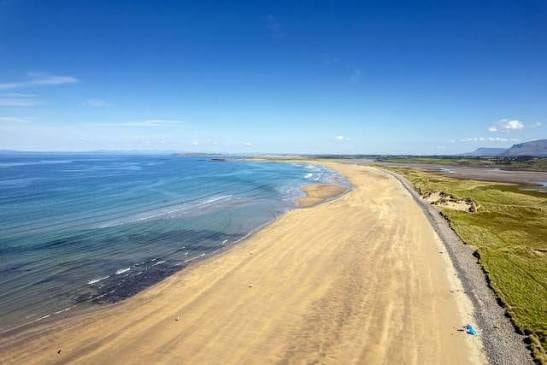
Streedagh Beach
A 3km wild Atlantic strand beneath Benbulben — where three Spanish Armada ships were wrecked in 1588, and where the views, surfing and sense of history are equally hard to forget.
About
Streedagh Beach is near Grange in north County Sligo, along the Wild Atlantic Way. The beach runs for roughly 3km from Streedagh Point towards Connor's Island, making it a straightforward drive from Grange, Sligo Town, Mullaghmore and the wider north-Sligo coastline. The location makes it particularly easy to combine with Benbulben and Drumcliffe. The beach forms a sandbar backed by dunes, with an estuary on its eastern side and the Atlantic Ocean to the west — giving you two very different environments almost side by side. One side can be exposed to Atlantic waves; the other is considerably more sheltered. Both support a wide range of plants and wildlife.
This is what makes Streedagh historically extraordinary. In September 1588, three ships from the Spanish Armada were wrecked along this coastline: La Lavia, La Juliana and Santa Maria de Visón. Hundreds of men were lost when the ships were driven onto the shore during severe Atlantic weather. Discover Ireland highlights Streedagh as one of the most important locations connected with the Armada wrecks in Ireland. The Spanish Armada had sailed against England in 1588 — after the campaign failed, surviving ships attempted to return to Spain by sailing north around Scotland and then down Ireland's Atlantic coast. Damaged vessels, exhausted crews, poor charts and violent Atlantic storms combined to wreck numerous ships around Ireland, and three of those ships met their fate at Streedagh.
One of the best-known survivors was Captain Francisco de Cuéllar. He survived the Streedagh wrecks and later wrote a detailed account of what happened to him in Ireland — describing shipwreck, escape, violence, hunger, Irish hospitality and an extraordinary attempt to survive while moving through the northwest of Ireland. Today his account provides one of the most vivid eyewitness descriptions of Ireland during the late 16th century. The best place to understand the full story is the Spanish Armada Visitor Centre in Grange, located in the old courthouse and including artefacts, immersive exhibitions, historical interpretation and a docudrama telling the story of Francisco de Cuéllar. The centre operates seasonally — currently weekends and bank holidays from Easter to September — so if you're visiting outside that window, check before travelling specifically for it.
Streedagh is one of Sligo's recognised bathing waters for the 2026 bathing season, with Sligo County Council monitoring the water through the summer. Discover Ireland also includes Streedagh among Ireland's good swimming beaches and describes the water as popular for sea swimming and paddleboarding. Lifeguard cover is available on weekends during July and August from 12:30pm–6:30pm — much more limited than at some larger resort beaches, so don't assume supervision is present simply because you're visiting during summer. Streedagh is also a recognised surf spot: the exposed beach and reef breaks can produce good waves, and the estuary side is calmer and used for windsurfing, stand-up paddleboarding and other watersports. Streedagh currently holds a Green Coast Award but is not on Sligo's 2026 Blue Flag list — the county's current Blue Flag beaches are Rosses Point and Enniscrone.
This is one of the best places in Sligo to photograph Benbulben. Discover Ireland specifically recommends bringing a camera because the mountain sits dramatically in the background — beach in front, dunes, water, then Benbulben rising behind everything like somebody dropped a giant flat-topped fortress into the landscape. On a clear day it's spectacular, and at sunset the Atlantic sits out in front while Benbulben and the wider mountains create a dramatic backdrop. For a simple visit allow around 1–2 hours: enough time to walk the strand, explore the dunes, look for fossils around the rocks, take photographs and visit the Armada memorial area. There is also a longer 5km easy walk linking sections of Streedagh Beach and the wider coastline, taking around one hour according to Tracks & Trails.
At very low tides, archaeological remains connected with the Armada wrecks have occasionally become visible along the shore. Discover Ireland notes that visitors may see remains associated with the ships during suitable low-tide conditions — however, these are protected archaeological remains. Do not remove timber, move objects, take artefacts or disturb anything you think may belong to the wrecks. Photograph it and leave it exactly where it is. Streedagh is also known for fossils in the exposed rock around the beach, and the dune system and estuary create valuable wildlife habitats — Discover Ireland specifically highlights the area's rich variety of native flora and fauna. Stay on obvious paths where possible and avoid trampling fragile dune vegetation. There is free parking at the western end of the beach, though the surface can be rough and potentially affected by high tides. Nearby Grange is the better place for food, coffee and pubs — Streedagh itself is more natural beach than seaside resort, and that's a large part of its charm.
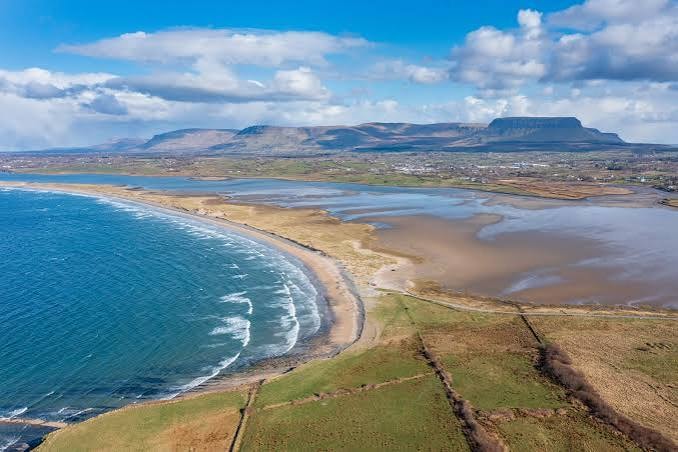
Best Time to Visit
Spring is excellent for quiet walks and photography. Summer is best for swimming and longer beach days — lifeguards operate on weekends during July and August from 12:30pm–6:30pm. September is often a brilliant compromise: long enough days, fewer visitors and dramatic light. Winter is wild and atmospheric, perfect for walking, but not the time to casually recommend sea swimming unless you're experienced and properly equipped. Low tide is particularly interesting year-round — you get more beach to explore and potentially a clearer look at geological and archaeological features.
Getting There
Streedagh Beach is near Grange in north County Sligo, along the Wild Atlantic Way — a straightforward drive from Grange, Sligo Town and Mullaghmore. Free parking is available at the western end of the beach, though the surface can be rough and is occasionally affected by high tides. The beach combines easily with the Spanish Armada Visitor Centre in Grange (open weekends and bank holidays Easter–September), Benbulben, Drumcliffe and Mullaghmore.
Highlights
Quick Facts
County
County Sligo
Region
North West
Category
Coastal


Keep exploring