Lowry's Bar — Clifden, County Galway
Lowry's Bar
Three generations of music, whiskey and Connemara welcome on Market Street since 1949.
About
There are pubs in Ireland, and then there is Dick Mack's. Located on Green Street in the heart of Dingle town, this extraordinary establishment has been operating since 1899 and has managed to remain genuinely, stubbornly itself through more than a century of change. The front of the building still carries the original signage — 'Haberdashery' on one side, 'Dick Mack's' in bold lettering across the top — and inside, the two functions of the premises coexist in a way that seems entirely natural once you're standing in it.
The haberdashery side of the business is not a gimmick or a heritage display. Dick Mack's still sells leather goods — belts, wallets, straps — handmade on the premises, as they have been for generations. The workbench and tools are visible behind the bar, and the smell of leather mingles with the smell of stout in a combination that is entirely unique to this one place on earth. The current owners, the Greene family, have maintained both sides of the business with evident pride.
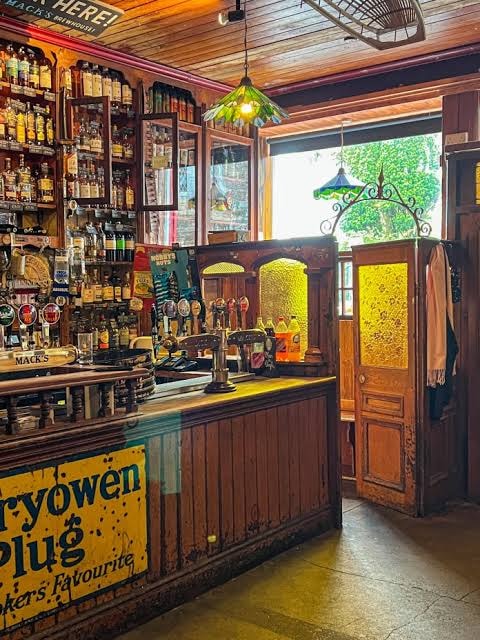
The pub itself is a masterpiece of accumulated character. The interior is a warren of small rooms and snugs, each one lined with old photographs, memorabilia, and the kind of objects that accumulate over a century of continuous occupation. The bar counter is worn smooth, the wooden fittings are dark with age, and the whole place has the feeling of somewhere that has never been renovated for the sake of it. What you see is what has always been there, and that authenticity is immediately apparent.
Dick Mack's has its own brewery — Mack's Brewery — and the craft beers produced here are among the best reasons to visit. The range includes a pale ale, a red ale, and a stout, all brewed locally and served alongside an impressive selection of Irish whiskeys. The whiskey collection is taken seriously here, with bottles from distilleries across the island lining the shelves behind the bar. For anyone with an interest in Irish whiskey, this is a very good place to spend an afternoon.
The pub's fame has spread well beyond Kerry. Stars of stage and screen have been making the pilgrimage to Dick Mack's for decades, and the pavement outside is embedded with stars bearing the names of celebrity visitors — a tradition that began when the pub's fame reached Hollywood. But the celebrity associations have not changed the atmosphere. Dick Mack's remains a local pub at heart, and on any given evening you are as likely to be sitting beside a Dingle fisherman as a film director. That mix is part of what makes it special.
If you're looking for a great coffee shop in Galway City, Coffeewerk + Press is one of those places that deserves a spot on your list. Located at 4 Quay Street, right in the heart of Galway's lively Latin Quarter, this distinctive little café combines speciality coffee, art and design in one of the city's most colourful streets. Whether you're exploring Galway for the day or simply searching for a quality cup of coffee, Coffeewerk + Press makes an excellent stop while wandering through the city centre.
Coffee is at the heart of Coffeewerk + Press Galway, with a strong focus on carefully sourced, high-quality beans. The café has developed its own coffee projects and collaborations, including working with April Coffee Roasters in Copenhagen. Coffeewerk says its coffees are sustainably sourced, with an emphasis on building a better future for coffee farmers. Expect carefully prepared espresso and filter coffees, with different origins and flavour profiles available throughout the year. For anyone searching for speciality coffee in Galway, this is certainly a café worth knowing about.
What really makes Coffeewerk + Press stand out from many other cafés in Galway City is that there is much more to discover than coffee. The space combines a café with a carefully curated collection of art, prints, books and beautifully designed products. Its sister company, Artwerk Press, works with both local and international artists, bringing another creative element to the experience. You'll find everything from postcards and prints to books, homeware and design pieces. It feels particularly at home in Galway — a city already well known for its independent shops, creativity, music and arts scene.
The location couldn't be much better for visitors. Coffeewerk + Press sits on Quay Street, one of the best-known streets in Galway City and right in the middle of the Latin Quarter. From here you're within easy walking distance of Shop Street, the Spanish Arch, the River Corrib and Galway's historic city centre. That makes it an ideal place to stop for coffee while spending a day exploring Galway on foot. Grab a coffee, browse the artwork and design pieces, and then step straight back out into one of the liveliest parts of the city. Opening hours: Monday–Sunday 9:00am–6:00pm. Opening hours can change around public holidays, so it's always worth checking before travelling.
If you're searching for speciality coffee in Galway, Kali Coffee Bar in Salthill is a place that should definitely be on your radar. Located at 133 Upper Salthill Road, just a short distance from the famous Salthill Promenade, this independent coffee shop has developed an impressive reputation for excellent coffee and a welcoming, relaxed atmosphere. Owned by husband-and-wife team Enda and Laura, Kali Coffee Bar opened its doors in January 2021 after the pair spent years working in coffee and hospitality. Their philosophy is simple: 'coffee with intention' — taking care over how every coffee is sourced, brewed and served.
Coffee lovers have an especially good reason to visit Kali. Co-owner Enda Johnstone won the Irish Brewers Cup in 2023, earning the opportunity to represent Ireland at the World Coffee Championships, where he finished an impressive 16th. At Kali, there is a strong focus on carefully sourced speciality coffee from quality roasters in Ireland and across Europe. The team looks for roasters that focus on sustainable practices, transparency and ensuring coffee producers receive a sustainable income. Alongside espresso-based favourites, Kali is particularly well known for its filter coffee, with the coffees available changing regularly. If you're serious about coffee — or simply enjoy discovering something different — the team is passionate about helping people explore different beans, origins and brewing methods without making speciality coffee feel intimidating.
Despite the serious attention given to the coffee, Kali has a refreshingly relaxed approach. The aim is to make great coffee accessible to everyone, whether you're a speciality coffee enthusiast or you simply want a good flat white while exploring Galway. Kali is also dog-friendly, making it a great coffee stop if you're walking along the nearby Salthill Prom with your four-legged companion. The café has also made efforts to be more inclusive and accessible, with the team learning Irish Sign Language (ISL) to help communicate with deaf and hard-of-hearing customers.
One of Kali Coffee Bar's nicest features is its outdoor garden area, known as the Kali Oasis. When Galway's famously unpredictable weather cooperates, visitors can take their coffee outside and relax in the garden beneath the trees. It gives Kali a different feel from many of the coffee shops in Galway, particularly on a sunny day when you can escape the bustle of Salthill for a while. Kali's location makes it an easy addition to a day exploring Salthill and Galway City — pick up a coffee before walking the Salthill Promenade, visit the nearby seafront or continue towards Galway City Centre. Opening hours: Monday–Friday 8:00am–3:00pm. Closed Saturday and Sunday. Hours can change around holidays, so we recommend checking before making a special journey.
If you take your coffee seriously, District Speciality Coffee is well worth seeking out while you're in Roscommon Town. This independent coffee shop opened in July 2021 and was the first in Roscommon to bring award-winning 3FE speciality-grade coffee beans to the town. Tucked away on Abbey Street, directly across from Roscommon Courthouse, District has a cosy rustic interior featuring exposed stonework — the sort of space that feels genuinely independent rather than a high-street chain. The focus here is very much on the coffee itself, with trained baristas serving everything from Americanos and lattes to hot chocolate in a relaxed little space that's easy to settle into.
The coffee beans are supplied by Dublin-based 3FE and roasted to order before being delivered fresh to District. 3FE has built a strong reputation in Ireland for sourcing high-quality speciality coffee, and the café highlights 3FE's direct relationships with coffee producers — helping ensure farmers receive a better price for their beans. If you find a coffee you particularly like, District also sells beans and home-brewing equipment through its online shop, making it a useful stop for anyone who wants to bring a little of that quality home.
District is a particularly handy stop if you're exploring Roscommon on foot. Roscommon Castle, the town centre and several of the main historic sights are all nearby, so it's an easy place to grab a coffee before continuing your day. Current opening hours are Monday to Friday 7:30am–4:30pm and Saturday 8:30am–4:30pm, with the shop currently closed on Sundays. For us, District is the sort of place that's worth knowing about when visiting a town: small, independent and focused on doing one thing particularly well. You'll find it at Abbey House, Abbey Street, Roscommon, F42 Y098.
If you're looking for a great coffee shop in Carrick-on-Shannon, VDA Coffee is well worth adding to your list. Located on Main Street in the heart of Carrick-on-Shannon, County Leitrim, this bright and welcoming café has built a strong reputation for quality speciality coffee and friendly service.
Coffee is very much the star of the show at VDA Coffee Carrick-on-Shannon. VDA focuses on sourcing high-quality coffee beans from around the world, with its regular house blend available throughout the year alongside a changing selection of guest single-origin coffees. The team takes coffee seriously, but the atmosphere remains relaxed and approachable. Whether you're after a morning flat white, cappuccino or latte, or you simply want somewhere to sit down and recharge while exploring Carrick-on-Shannon, VDA makes an easy stop in the centre of town. Alongside the coffee, visitors can also find a selection of pastries, cakes and sweet treats, making it a handy option for a quick coffee break.
One of the things that helps VDA stand out among the cafés in Carrick-on-Shannon is its distinctive, colourful style. The VDA concept takes inspiration from the Dutch De Stijl art movement, while the name comes from the Dutch phrase Voor De Aroma — 'For the Aroma'. The result is a coffee shop with plenty of personality rather than a generic café experience. VDA is also known for creating a friendly and informal atmosphere. It is dog-friendly, making it particularly useful if you are exploring Carrick-on-Shannon with your four-legged travel companion.
Its central Main Street location makes VDA a convenient stop during a day exploring Carrick-on-Shannon and County Leitrim. Grab a coffee before wandering through town, take a break while shopping or call in before continuing your journey around Ireland's Hidden Heartlands. For coffee lovers in particular, VDA is one of the Carrick-on-Shannon cafés to keep in mind. Opening hours: Monday–Friday 7:30am–4:30pm, Saturday 8:30am–4:00pm, Sunday 9:30am–4:00pm. Opening hours can change around public holidays, so it is worth checking before travelling.
There are plenty of pubs in Dublin that will tell you they have traditional Irish music. The Cobblestone on North King Street in Smithfield is one of the few that genuinely means it. This is not a pub that has added a trad session as an afterthought for tourists. Music is woven into the fabric of the place — it has been for generations — and the sessions that happen here are among the most authentic you will find anywhere in the city.
The Cobblestone sits on the corner of North King Street and King Street North in Smithfield, on the north side of the Liffey. The area has changed considerably around it over the decades, but the pub itself has remained largely as it was — a low-ceilinged, wood-panelled room with photographs of musicians on the walls, a bar that has been worn smooth by decades of elbows, and an atmosphere that feels entirely genuine. There is no stage, no PA system, no cover charge. Musicians gather, instruments come out, and the session begins.
The trad sessions at The Cobblestone are the heart of the pub's identity. Sessions take place most evenings throughout the week, with the busiest and most lively nights typically falling on Thursday, Friday and Saturday. Sunday afternoons are also well regarded. The music is participatory rather than performative — experienced musicians sit together and play, others join in, and the session builds organically over the course of the evening. Visitors are welcome to listen, but the sessions are not performances put on for an audience. They are the real thing, and that distinction is felt immediately when you walk in.
The pub's history stretches back to the mid-eighteenth century, with records of a public house on the site dating to around 1745. The Mulligan family, who have been associated with The Cobblestone for many years, have maintained its character through periods when much of the surrounding neighbourhood was transformed. The pub became a focal point for Dublin's traditional music community, and that community has remained loyal to it. When a planning application in 2021 proposed a large hotel development that would have significantly altered the pub's surroundings, thousands of people gathered outside in protest — a demonstration of how deeply the pub is embedded in Dublin's cultural life.
The Cobblestone is not a pub that tries to be everything to everyone. The drinks list is straightforward — well-kept Guinness, a solid whiskey selection, and the usual range of draught beers. The food offering is minimal. What the pub does, it does exceptionally well: it provides a space where traditional Irish music can happen naturally, without commercial pressure or tourist-facing performance. For visitors who want to experience genuine trad music in Dublin rather than a staged version of it, The Cobblestone is the place to go.
Smithfield itself has become one of the more interesting parts of Dublin to explore. The square has been redeveloped significantly over the past two decades, and the area now has a mix of independent cafés, restaurants and bars alongside the older fabric of the neighbourhood. The Old Jameson Distillery is a short walk away, and the area is well connected to the city centre by Luas. Coming to The Cobblestone as part of a broader afternoon or evening in Smithfield makes for one of the more rewarding ways to spend time in Dublin beyond the usual tourist circuit.
A few things worth knowing before you visit. The Cobblestone can get very busy on session nights, particularly Thursday through Saturday. Arriving early — before 8pm — gives you a better chance of finding a seat close to the music. The pub is small, and on a busy Friday evening it will be standing room only. That is part of the experience, but it is worth being prepared for. The sessions typically start in the early evening and continue late into the night. There is no admission charge and no obligation to buy a minimum number of drinks. Come, listen, and let the music do the rest.
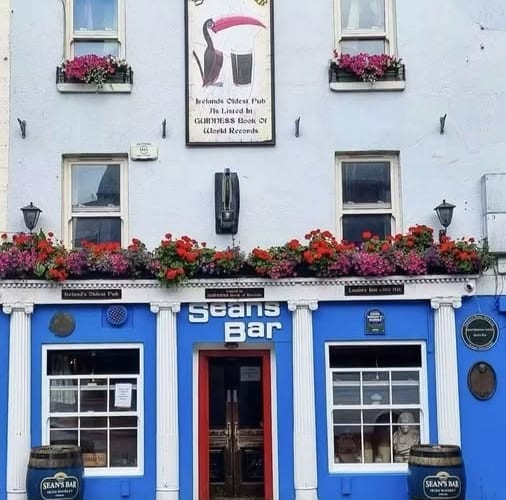
Seán's Bar sits on the west bank of the River Shannon in Athlone, and it is not merely one of the oldest pubs in Ireland — it is, according to the Guinness World Records, the oldest pub in the world. The building's origins have been dated to around 900 AD, a claim supported by archaeological evidence uncovered during renovations in the 1970s, when workers discovered wattle walls and coins from the tenth century beneath the floor. Those artefacts are now on display in the National Museum of Ireland, but the pub itself continues to serve pints on the same ground where it has stood for over eleven centuries.
The interior is everything you would hope for from a pub of this age — low ceilings, uneven floors, walls that lean at angles accumulated over a millennium of settling, and a bar counter worn smooth by generations of elbows. The atmosphere is warm and unhurried, the kind of place where conversations start easily and last longer than intended. The Shannon runs just outside the door, and on summer evenings the terrace at the water's edge is one of the finest places in the Irish Midlands to sit with a cold pint and watch the river traffic move slowly past.
Athlone itself is one of the most underrated towns in Ireland — a proper working town at the geographical heart of the country, with a fine medieval castle, a lively food scene, and the Shannon at its centre. Seán's Bar is the anchor of the town's west bank, a short walk from Athlone Castle across the bridge, and it draws visitors from across the world who come specifically to drink in the oldest pub on earth. The staff are well used to the questions that come with the territory — the history, the records, the archaeology — and they answer them with the easy familiarity of people who have heard them a thousand times and still find them worth answering.
The pub serves a straightforward selection of draught beers, stouts, and spirits, with no pretension and no gimmicks. The Guinness is well kept. There is occasional live traditional music, particularly at weekends, and the sessions that develop organically on a Friday evening — musicians arriving one by one, the music building slowly — are among the most authentic trad experiences in the Midlands. Seán's Bar is not a tourist attraction that happens to serve drinks; it is a working pub that happens to be the oldest in the world, and the distinction matters.
OX opened on Oxford Street in Belfast in 2013 and within a year had earned a Michelin star that it has held ever since. The restaurant sits in a converted warehouse on the banks of the River Lagan, its industrial bones softened by warm lighting, an open kitchen, and a wine cellar that runs the length of one wall. It is one of the most quietly confident restaurants in Ireland — a place that knows exactly what it is and has no interest in being anything else.
Chef Stephen Toman's cooking is defined by restraint and precision. The tasting menus — typically six or eight courses — are built around the best Irish produce he can source: fish from the boats at Kilkeel and Portavogie, lamb and beef from farms in County Down, vegetables and herbs from growers he has worked with for years. The cooking is technically accomplished without being showy, and the flavours are clean and direct. A meal at OX is one of the finest expressions of what modern Irish cooking can be.
The wine programme, overseen by co-owner Alain Kerloc'h, is exceptional — one of the best in Belfast, with a particular strength in natural and biodynamic wines from small producers across Europe. The sommelier pairings are thoughtful and often surprising. Booking is essential and should be made well in advance, particularly for weekend evenings. The lunch menu offers a more accessible entry point to the cooking at a significantly lower price point.
Kai sits on Sea Road in the Westside neighbourhood of Galway, a short walk from the city centre, and it has been one of the most beloved restaurants in the west of Ireland since it opened in 2011. The room is small and warm — mismatched furniture, local artwork on the walls, the kind of place that feels immediately like somewhere you belong. There is nothing here of the formal restaurant experience; Kai is a neighbourhood restaurant in the truest sense, and the neighbourhood is lucky to have it.
Chef-owner Jess Murphy, who grew up in New Zealand and trained in some of the best kitchens in Europe before settling in Galway, has built the restaurant around a simple principle: source the best ingredients from the best local producers and let them speak. The menu changes daily depending on what has arrived from the farms, boats, and foragers that supply the kitchen. The cooking is confident and unfussy — a dish might be as simple as a piece of perfectly cooked fish with a sauce built from whatever herbs are in the garden, and it will be one of the best things you eat in Ireland.
Kai is open for brunch and lunch as well as dinner, and the brunch menu — served at weekends — is one of the finest in Galway. The coffee is excellent, the bread is baked in-house, and the egg dishes are a cut above the standard brunch fare. Booking is essential for dinner and strongly recommended for weekend brunch. The wine list is short, carefully chosen, and fairly priced, with a good selection of natural wines that change with the seasons.
Tucked away on Middle Street in Galway City, Cava Bodega is one of those restaurants that feels slightly unexpected. Outside, the bright yellow frontage immediately catches your eye. Inside, the atmosphere shifts towards Spain. Tapas arrive in waves. Wine comes from Spanish regions. And the menu combines classic Spanish ideas with ingredients sourced much closer to home. For anyone looking for somewhere different to eat in Galway City, Cava Bodega is a very easy place to recommend. The restaurant was founded by JP McMahon and Drigín Gaffey and has become a firm part of Galway's food scene, with McMahon particularly well known for his work in Irish food and restaurants.
Cava Bodega is built around sharing. Rather than everyone ordering one large main course, you choose several smaller plates for the table. A Taste of Galway describes the restaurant as offering more than 70 regional Spanish tapas, depending on the current menu — covering vegetable dishes, meat, fish, cured meats, cheeses, pinchos and desserts. That gives you plenty of room to build a meal around your own tastes. One of the nicest things about Cava Bodega is that it doesn't simply try to recreate Spain using ingredients flown halfway across Europe. The restaurant has long focused on combining Spanish cooking with local Irish produce — locally sourced fish, meat, vegetables and other ingredients from nearby producers. So the cooking may be Spanish in style, but there's still a very definite Galway connection.
Wine is a big part of the experience. Cava Bodega's list focuses heavily on Spanish wines, with bottles and glasses from different regions, alongside sherry, other Spanish drinks, and local craft beers and ciders. If you're unfamiliar with Spanish wine, this is exactly the kind of place to ask staff for a recommendation. Typical spend is around €30–€40 per person depending on drinks and how many tapas you order. Current opening hours are Monday–Thursday 5pm–10pm, Friday 4pm–10pm, Saturday 3pm–10:30pm and Sunday 3pm–9:30pm, though these can change around bank holidays and events. Booking is strongly recommended for Friday and Saturday evenings, festival weekends, Race Week and busy summer periods.
The interior feels much more intimate than the bright street frontage suggests — warm colours, wooden tables, Spanish artwork, wine displays and several different dining levels. The layout creates the feeling of a busy neighbourhood tapas bar rather than a formal restaurant. There is also a small outdoor seating area on Middle Street, which is a lovely spot on a mild evening. Vegetarian and vegan options are available, as are gluten-free options — though anyone with coeliac disease or a serious allergy should speak directly with staff about preparation. The tapas format works well for families with older children, and for mixed groups where everyone wants to try different things. Our advice: order a few dishes first, then add more. Tapas has a habit of looking modest until the entire table suddenly disappears under small plates.
If you're craving something big, messy and seriously satisfying in Galway City, Smashbird on Cross Street Lower is well worth knowing about. This casual spot specialises in smash burgers, buttermilk fried chicken, loaded fries, wings and tenders, with plenty of bold flavours running through the menu. It sits right in the heart of the Latin Quarter, making it an easy lunch stop or a casual evening option while exploring the city centre.
The burgers are the main attraction. The Melter comes with Hickey's beef patties, streaky bacon, American cheddar, Jack cheese, house pickles and Smash sauce. The Hatch features double beef patties, cheddar, pickles and Smash sauce. Both are the kind of burgers that require two hands and a stack of napkins — which is exactly what you want from a smash burger. The beef is pressed hard onto a hot flat-top griddle, creating a thin, crispy-edged patty with a caramelised crust that you simply can't replicate any other way.
Chicken fans are equally well catered for. The buttermilk fried chicken burgers include the Hot Honey Butter Chicken Sambo and Bangin Buff, both delivering the kind of crispy, juicy fried chicken that has made this style of cooking so popular. The buttermilk marinade tenderises the chicken and helps the coating adhere properly, giving you that satisfying crunch on the outside and moist meat inside.
Don't ignore the sides. Garlic butter parmesan fries and spice-bag tater tots are both worth ordering, but the standout is the Disco Fries — topped with buffalo chicken, pickles and jalapeño drizzle. It's the kind of loaded side that could easily be a meal in itself. There are also vegan options and a kids' menu, making Smashbird a practical choice for groups where everyone wants something slightly different.
Smashbird has picked up some recognition to go with the queues. The Galway restaurant was promoted as a 2025 regional Restaurant Awards winner for Burger & American food, which puts it in solid company for a relatively casual operation. The Cross Street Lower location is as central as it gets in Galway — you're a short walk from Shop Street, Quay Street and the Spanish Arch, so it fits naturally into a day exploring the city. Dine-in and takeaway are both available.
If you're looking for a traditional Irish pub near Carrick-on-Shannon that feels a world away from busy high streets, late bars and modern gastro pubs, Anderson's Thatch Pub is well worth seeking out. Located around 3km from Carrick-on-Shannon on the Roscommon side of the River Shannon, this wonderfully old-fashioned thatched pub is all about atmosphere, conversation, music and the simple pleasure of sitting down for a pint somewhere with genuine character. There are no flashy interiors or attempts to turn the place into something overly polished. Instead, you get low ceilings, old furniture, a real thatched roof, traditional music, storytelling and the sort of relaxed atmosphere that has slowly disappeared from many Irish pubs.
The thatched roof is obviously one of the first things you'll notice. Traditional thatched pubs have become relatively rare in Ireland, which immediately makes Anderson's stand out. Thatch was once widely used throughout rural Ireland because materials such as straw and reeds were readily available. Over time, slate, tile and modern roofing materials replaced it on most buildings. Those pubs that still retain their thatched roofs therefore offer a glimpse of an older Ireland. Combined with the rural setting and traditional interior, the roof gives The Thatch a character that would be almost impossible to recreate in a newly built pub.
Music is a huge part of the experience here. The pub hosts traditional music sessions throughout the week, along with singing, spoken word and visiting musicians. And this isn't necessarily the kind of scheduled performance where everyone sits facing a stage. A good traditional Irish music session can be far more spontaneous — musicians gather together, tunes begin, songs appear from nowhere and suddenly half the room seems involved. You might visit for a quiet pint and find yourself staying for several hours because a session gets going. If traditional Irish music is important to you, it's worth checking ahead to see what's happening on the night you're visiting.
The Thatch is also very much a conversation pub. Some pubs are designed around televisions. Others revolve around food, cocktails or large groups. The atmosphere here is much closer to the traditional rural Irish pub where people actually talk to one another. Visitors frequently mention the welcome and the ease with which strangers end up chatting. Writer Michael Harding even singled out The Thatch in The Irish Times, describing its mix of old furniture, candlelight and music and saying he'd give it his vote for the best pub in the country. It's the kind of place where you could arrive knowing nobody and quite easily find yourself in conversation with half the bar before the night is over.
One of the most unusual things about Anderson's Thatch is its popularity with motorhome and campervan travellers. The pub offers private overnight motorhome parking, making it an interesting stop for anyone touring Ireland by camper. That means you can park up, enjoy an evening of traditional music and then stay nearby rather than worrying about driving afterwards. Its location just outside Carrick-on-Shannon is also particularly useful for motorhome travellers exploring the River Shannon, Lough Key and Ireland's Hidden Heartlands. The Thatch is primarily a traditional pub rather than a restaurant — if you're planning an evening visit, eat in Carrick-on-Shannon beforehand and head out to The Thatch for drinks and music. The pub is currently listed as open nightly from 8pm until late, with Sunday opening from 6pm — always worth checking ahead, particularly outside the main tourist season.
In the small County Leitrim town of Drumshanbo, one of Ireland's most recognisable modern gin brands is being produced inside a working distillery at the foot of Sliabh an Iarainn. The Shed Distillery of PJ Rigney is the home of Drumshanbo Gunpowder Irish Gin, Drumshanbo Single Pot Still Irish Whiskey and Sausage Tree Pure Irish Vodka. But this isn't simply somewhere producing bottles behind closed doors — visitors can step inside the fully operational distillery, see where the spirits are made, learn the story behind PJ Rigney's unusual botanical combinations and finish with tastings inside the beautiful Honey Badger Bar. For us, it's one of the best indoor attractions in County Leitrim, particularly when the Irish weather decides that your planned walk around Lough Allen isn't happening.
The story begins with PJ Rigney, who wanted to create an authentic Irish distillery where traditional methods could be combined with unusual ingredients and ideas gathered through years of travel. He eventually chose Drumshanbo, surrounded by the Leitrim countryside, Lough Allen and Sliabh an Iarainn. The distillery's first whiskey was laid down on 21 December 2014 — the winter solstice — marking the return of whiskey distilling to Connacht after more than a century. The most recognisable product is Drumshanbo Gunpowder Irish Gin, whose distinctive blue bottle is now found in bars and shops far beyond Leitrim. The gin combines traditional botanicals with ingredients inspired by PJ Rigney's travels through Asia, with gunpowder tea — a green tea whose leaves are rolled into small pellet-like shapes — as the key ingredient behind the name.
The main visitor experience is the Curious Journey Distillery Tour — a fully guided tour through the working distillery. Rather than simply walking through a museum about alcohol production, you're visiting the place where the spirits are actually being made. Guides known as Curious Ambassadors explain the distilling process, the ingredients and the story behind the brand. The standard tour currently starts from €19 per adult, and the distillery recommends allowing at least 1½ hours for the complete visit. One of the tour highlights is a tasting of Drumshanbo Single Pot Still Irish Whiskey, which uses Irish malted and unmalted barley alongside Irish Barra oats and is matured in a combination of casks. After more than a decade of production, the distillery has also released its first 10-year-old Drumshanbo Single Pot Still Irish Whiskey.
Then comes one of our favourite parts of the experience. The tour finishes inside the Honey Badger Bar — a striking botanical glasshouse at the centre of the visitor complex. Here visitors receive a Drumshanbo Gunpowder Irish Gin tasting, with the standard experience finishing with a gin and tonic. The bar itself is worth seeing even before the drinks arrive. Plants, glass, natural light and oriental-inspired details give it a completely different feel from a typical distillery tasting room. The Honey Badger Bar is open seven days a week and remains open later on Fridays and Saturdays, with a drinks menu including cocktails, whiskey, gin, vodka, wines, beer and non-alcoholic options.
You don't have to leave once the tour finishes. The Jackalope Café serves food and drinks inside the visitor complex — expect hearty Irish dishes alongside some influences from PJ Rigney's travels, including local dishes such as Leitrim boxty. That means you could easily turn your visit into a two-hour or half-day stop rather than simply doing the tour and leaving. There's also a large gift shop at the distillery where, alongside the main spirits, you'll find distillery-exclusive bottle editions, local artisan produce, clothing, barware and other gifts. Under-18s are welcome with an accompanying adult, and the distillery describes the experience as dog friendly with dogs required to remain on a lead. Free car parking is available for all visitors.
Once you've finished at the distillery, there's a great outdoor attraction just minutes away. Acres Lake Boardwalk forms part of the Shannon Blueway — the floating boardwalk is around 600 metres long and sits within a wider walking and cycling route connecting Drumshanbo with Battlebridge near Leitrim Village. On a dry day, walk around Acres Lake first and then head to the distillery. The wider Shannon Blueway gives walkers and cyclists another reason to spend time around Drumshanbo, with a roughly 20km return cycling option between Leitrim Village and Drumshanbo. Drumshanbo also sits close to the southern edge of Lough Allen, one of the great lakes of the River Shannon system, with walking, cycling and water-based activities around the region. The distillery is also an easy trip from Carrick-on-Shannon — roughly 15–20 minutes away — making it a natural addition to any weekend based around Ireland's Hidden Heartlands.
Dingle Distillery was founded in 2012 as one of the first craft distilleries in Ireland, at a time when the country's whiskey industry was just beginning its remarkable revival. Located on the edge of Dingle town in a converted building with views of the surrounding hills, it has become one of the most celebrated small distilleries in the world — its single malt whiskey, released in small batches, sells out within hours of each release and commands prices at auction that reflect its reputation among serious whiskey collectors.
The distillery produces both whiskey and gin, and both are exceptional. The single malt is aged in a combination of bourbon and port casks, giving it a complexity and depth that belies its relatively young age — the combination of the Kerry climate, the small still size, and the quality of the local barley produces a spirit with a character that is unmistakably Irish but unlike anything else being made in the country. The gin, distilled with a botanical bill that includes locally foraged heather and bog myrtle, is one of the finest Irish gins available.
The distillery tour is one of the best in Ireland — informative, unhurried, and ending with a tasting in the bar that gives visitors the opportunity to try the full range of spirits. The guides are knowledgeable and passionate, and the tour explains not just the production process but the philosophy behind the distillery — a commitment to small-batch production, local ingredients, and the kind of patience that good whiskey demands. The distillery shop is one of the best places in Ireland to buy Irish whiskey, with a selection that extends well beyond the Dingle range.
The Farmgate Café occupies a gallery above the stalls of Cork's English Market — one of the oldest covered food markets in the world, trading continuously since 1788 — and it is one of the most singular dining experiences in Ireland. The concept is beautifully simple: the kitchen buys from the market traders directly below, and the menu reflects whatever is best on any given day. The result is cooking that is rooted in Cork's food culture in a way that no other restaurant in the city can match.
The menu is a document of Cork's culinary identity. Tripe and drisheen — the offal dishes that have sustained the city for centuries — appear alongside smoked fish from Frank Hederman's stall, charcuterie from the market's butchers, and vegetables from the county's farms. The cooking is straightforward and confident, the kind of food that has been eaten in Cork for generations and that the Farmgate presents without apology or irony. The full Irish breakfast, served until midday, is one of the finest in the country.
The café is open for breakfast and lunch only, which means the kitchen is at its best in the morning hours when the market is in full swing below. Sitting at the gallery rail with a coffee and a plate of smoked salmon and brown bread, watching the traders and shoppers move through the market stalls, is one of the great Cork experiences. The café is busy every day and does not take reservations — arrive early or be prepared to wait, particularly on Saturday mornings when the market is at its most vibrant.
McDonagh's has occupied the same corner on Quay Street in Galway since 1902, and in that time it has become one of the most enduring food institutions in the west of Ireland. Four generations of the McDonagh family have run the business, and the formula has changed very little in over a century: fresh fish from the Atlantic, hand-cut chips, and a dining room that has fed everyone from local fishermen to visiting heads of state. The queues that form outside on summer evenings are a reliable indicator of quality.
The fish comes from the boats that work the waters off the Connemara coast and the Aran Islands, arriving at the restaurant daily. The batter is light and crisp, the fish inside perfectly cooked — flaking cleanly from the fork, sweet and fresh-tasting in a way that only very recently caught fish can be. The chips are thick-cut and golden, with a fluffy interior and a proper crust. The mushy peas are made from scratch. The tartare sauce is house-made. These details matter, and McDonagh's has never stopped caring about them.
The restaurant is divided into two sections — a takeaway counter at the front where you can eat standing up or take your food to the nearby Spanish Arch, and a sit-down restaurant at the back with full table service. There is something particularly satisfying about eating fish and chips from the paper at the Spanish Arch on a summer evening, watching the boats on the Corrib and the swans drifting past. It is one of the quintessential Galway experiences.
Sheridan's Cheesemongers began as a market stall in Galway in the early 1990s and has grown into one of the most important food businesses in Ireland — a cheesemonger, deli, and wine bar that has done more than almost any other single enterprise to develop the market for Irish artisan cheese. The shop on Church Lane in Galway is the original, and it remains the best: a narrow, fragrant space packed floor to ceiling with wheels and wedges of cheese from every county in Ireland, alongside a carefully chosen selection of European farmhouse cheeses.
The upstairs wine bar is one of the finest small wine bars in Ireland. The list focuses on natural, biodynamic, and low-intervention wines from small producers across Europe, chosen with the same care and knowledge that goes into the cheese selection. The food is simple and perfectly calibrated to the wine — boards of Irish cheese with house-made accompaniments, charcuterie from the deli counter below, good bread, and whatever else the kitchen has assembled from the day's deliveries. It is the kind of place where an hour can easily become three.
Sheridan's has been instrumental in the development of Irish artisan cheese, working directly with farmhouse producers across the country and providing them with a market and a platform that helped sustain the industry through difficult years. The staff are knowledgeable and enthusiastic — ask for a recommendation and you will receive a considered answer based on what is at its best that day. The shop also stocks a wide range of Irish artisan food products, making it one of the best places in Galway to buy gifts and provisions for the road.
The Long Hall is one of the finest surviving Victorian pub interiors in Ireland, and possibly in the world. Located on South Great George's Street in Dublin's city centre, it has been a pub since the 1760s and the current interior — all dark mahogany, etched glass, ornate mirrors, and a ceiling hung with antique clocks — dates largely from a Victorian refurbishment in the 1880s. It is a room that rewards slow looking: every surface has been accumulated over generations, and the overall effect is of a place that has absorbed the city's history without being overwhelmed by it.
The Guinness here is poured with the care and patience that the stout deserves — a two-part pour, the glass left to settle on the bar before the final top-up, the result a pint with a dense, creamy head and a clean, bitter finish. The bar staff are experienced and unhurried, and the atmosphere on a weekday afternoon, when the pub is quiet and the light comes through the etched glass windows in long shafts, is one of the most pleasant in Dublin. On weekend evenings the pub fills with a mixed crowd of locals, tourists, and regulars who have been drinking here for decades.
The Long Hall is one of a diminishing number of Dublin pubs that has resisted the temptation to modernise, extend, or theme itself for the tourist trade. There is no food, no live music, no quiz night — just a beautiful room, well-kept beer, and the particular pleasure of drinking in a place that knows exactly what it is. It is listed as a protected structure by Dublin City Council, which means the interior is legally preserved for future generations. Visit on a quiet afternoon if you can — the pub at its best is a place of genuine tranquillity in the middle of a busy city.
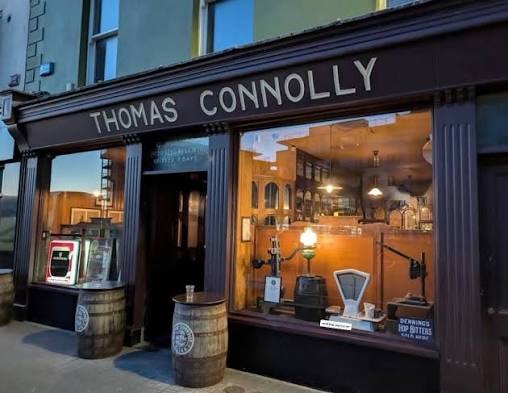
Right in the heart of Sligo Town, Thomas Connolly is the kind of Irish pub that doesn't need to manufacture a sense of history. It has plenty of the real thing. There has been a pub on this site since 1780, while Thomas Connolly's was first licensed in 1861, making it the oldest traditional pub in Sligo Town. Step inside today and much of that old-world atmosphere remains. Wooden interiors, traditional snugs, a long bar, live music and an impressive whiskey collection make Thomas Connolly's somewhere worth seeking out rather than simply somewhere to stop for a drink.
The history here stretches back considerably further than the Thomas Connolly name. According to the pub's own records, there has been a public house on the site since 1780. Originally, the pub opened onto Holborn Street, while the section facing Markievicz Road was used as living accommodation during this earlier period. The premises was officially licensed in 1861. That means people have been stopping here for a drink for well over two centuries. The world outside the doors has changed almost beyond recognition — no cars, no railway when the first pub opened here, and Sligo's busy port playing an enormously important role in local life. Yet people are still walking through them for a pint.
The history of Thomas Connolly's is closely connected with Sligo's development as a busy trading town. During the 18th and 19th centuries, Sligo's port connected this part of Ireland with destinations across Britain, Europe and beyond. Ships brought goods including rope, linen and tea into Sligo. Like many traditional Irish pubs of the period, the business wasn't solely about selling alcohol — there was once a grocer's shop at one end of the premises where customers could buy everyday goods including tea and sugar, while whiskey was also bottled here. These combined grocery-and-pub businesses were once common throughout Ireland. Over the years, the grocery side disappeared. The pub remained.
The pub takes its name from Thomas Connolly, who acquired the premises in 1890 and became Mayor of Sligo in the same year — placing the pub firmly within the civic as well as social history of the town. Another major figure in Irish history is also believed to have passed through its doors. The pub records at least one visit from Charles Stewart Parnell, one of the most influential political figures in 19th-century Ireland. Thomas Connolly's hasn't been transformed into a polished modern bar pretending to be an old Irish pub. It retains the feel of a traditional drinking house — lots of dark timber, old fittings, snug seating and an intimate atmosphere. The traditional tongue-and-groove snugs are particularly characteristic, giving customers a little privacy away from the main bar in a way that immediately makes an old pub feel different from a modern open-plan bar.
If you enjoy Irish whiskey, Thomas Connolly's deserves particular attention. Whiskey has become a major part of the pub's modern identity, with an extensive and continually developing collection. The pub is also home to the Sligo Whiskey Society, which brings whiskey enthusiasts together for monthly meetings and tastings. It has collaborated on special whiskey releases, including its involvement in the Dunville's 1808 Casked in Bond Series. Don't worry if whiskey isn't your thing — alongside stout and other draught beers, Thomas Connolly's has developed collections of Irish craft beer and gin, as well as wine and non-alcoholic options. But for many visitors, the classic order will be considerably simpler: a pint of stout in one of Sligo's oldest pubs takes some beating.
Music is a major part of the pub's current identity. Sligo has an extraordinary musical tradition, and Thomas Connolly's regularly brings local and visiting musicians into the pub. The current weekly programme includes a mixture of traditional Irish music, acoustic sessions, swing jazz and other live performances, with music scheduled across several nights of the week including traditional sessions on Fridays and acoustic performances on Sundays. The schedule changes, so check what's on before your visit if live music is one of the main reasons you're going. There's something particularly special about hearing traditional music in an old Irish pub — the setting matters, and somewhere with more than two centuries of drinking, conversation and music behind it feels exactly right.
Thomas Connolly's has received significant recognition amongst Ireland's traditional pubs in recent years. It was named All Ireland Pub of the Year at the Irish Restaurant Awards in 2023 and Traditional Pub of the Year by Georgina Campbell in 2024. It has also appeared in Lonely Planet's selection of 20 of the best pubs in Ireland. Current opening hours: Monday–Thursday 12pm–11:30pm, Friday–Saturday 12pm–12:30am, Sunday 12:30pm–11pm. Thomas Connolly's is primarily a traditional pub and drinks destination rather than somewhere to choose specifically for a full restaurant meal — our preference is to have lunch or dinner elsewhere in Sligo Town and then head to Connolly's afterwards for a pint, whiskey or live music. It makes the pub part of a wider evening exploring Sligo rather than trying to make it something it isn't.
The Bulman sits at the water's edge in Summercove, a tiny harbour village a short walk from Kinsale town, and it is one of the most perfectly situated pubs in Cork. The bar occupies the ground floor of an old stone building that has been a pub for well over a century, and it has the feel of a place that has absorbed generations of fishermen, sailors, and travellers without losing any of its essential character. The views from the upstairs restaurant across Kinsale Harbour to the town and the hills beyond are among the finest from any dining room in Munster.
The food is straightforward and honest — the day's catch from the boats that work the waters around the Old Head of Kinsale, cooked simply and served with good bread and local butter. The fish and chips are a benchmark version: fresh cod or haddock in a light batter, proper chips, and a tartare sauce made in the kitchen. The chowder is thick and generous. In summer, the outdoor terrace above the harbour is one of the finest places in Ireland to eat lunch — a pint of cold beer, a bowl of chowder, and the boats moving in and out of the harbour below.
Kinsale itself is one of the finest food towns in Ireland, and The Bulman is an essential part of that story. The town has been a centre of culinary excellence since the 1970s, when a group of local restaurateurs established the Good Food Circle and began promoting the quality of Cork produce to visitors. The Bulman represents the more casual end of that tradition — a pub that takes its food seriously without taking itself too seriously, and that remains one of the most enjoyable places to eat and drink on the south Cork coast.
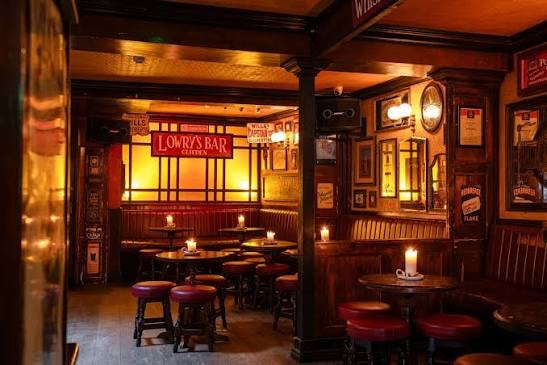
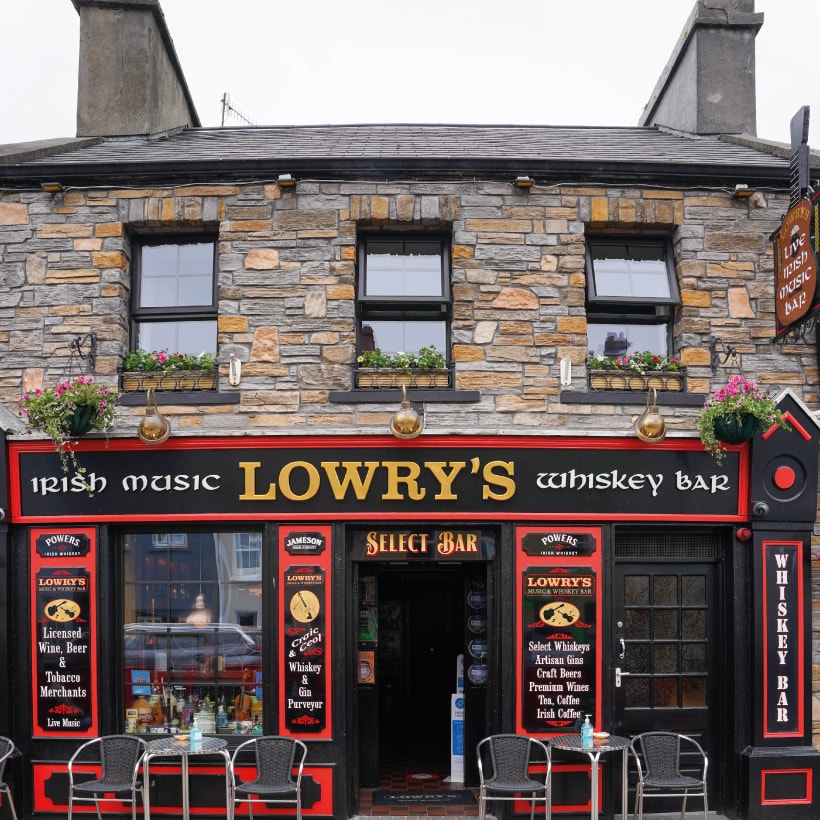
There are some pubs you visit for a drink. And there are others that become part of your memory of a place. Lowry's Bar on Market Street in Clifden very much falls into the second category. Sitting in the heart of this colourful Connemara town, Lowry's is everything many visitors hope to find when they picture a traditional pub in the west of Ireland — small, full of character, with Irish music playing and an enormous choice of whiskey behind the bar. On a good evening, you'll find locals and visitors squeezed together enjoying the kind of atmosphere that simply can't be manufactured.
Lowry's has been in the same family since 1949, when Patrick Lowry — a retired Garda sergeant from County Donegal — returned home to Connemara and purchased a pub on Market Street then known as Connolly's Bar. He renamed it Lowry's, and more than 75 years later his family is still behind the bar. In 1977, Patrick's niece Eilish and her husband Paul took ownership and continued developing the business while maintaining the traditional character that had made it popular with both locals and visitors. Today Damien, the third generation of the family, runs Lowry's. In an era when so many traditional pubs have disappeared or changed beyond recognition, there is something genuinely special about finding a place still being carried forward by the same family.
Don't expect a giant modern bar. That's part of the attraction. Lowry's has the intimate, old-fashioned atmosphere you'd hope to find in a traditional Connemara pub — dark timber, old fittings, shelves packed with bottles and memorabilia, and a feel that is lived in rather than designed. Plenty of places can recreate the appearance of an Irish pub. It is considerably harder to recreate decades of conversations, music, characters and stories. Lowry's already has those.
Music is one of the biggest reasons to visit. Lowry's describes itself as the home of Irish music in Clifden, and during the season there is live music seven nights a week. Traditional Irish and folk music form a major part of the programme, and depending on the evening you might encounter local musicians, visiting performers or a lively traditional session. The relatively small size of the pub makes a huge difference — you're not sitting at the back of a large entertainment venue watching musicians on a distant stage. The music becomes part of the room. That's exactly how traditional Irish music works best.
Then there is the whiskey. Lowry's has built an extensive collection and describes itself as having Connemara's largest selection of premium whiskey and gin. You'll find considerably more than the handful of familiar Irish whiskey brands available in most bars. There's even a great old Lowry's story involving whiskey — according to the pub's own history, customers visiting the local dentist would sometimes be sent to Lowry's afterwards for a large Jameson to help numb the pain and settle their nerves. Medical advice has moved on somewhat since then, but it gives you an idea of the role pubs once played in everyday Irish town life. The bar also carries an extensive range of premium and artisan Irish gin, so even if whiskey isn't your drink, there should be plenty to explore.
Lowry's has received serious recognition over the years. It won Best Traditional Bar in Ireland at the National Hospitality Awards in 2015, 2018 and 2019 — quite an achievement for a relatively small pub on the western edge of Ireland. More recently, Lowry's also won the Connacht Best Tourist Pub award in 2024 at the Irish Pub Awards. The awards reflect what visitors have been discovering for years: this is a traditional pub that has managed to become popular with tourists without losing the local atmosphere that made it worth visiting in the first place.
Lowry's couldn't be much better positioned for exploring Clifden and the surrounding area. Often called the Capital of Connemara, Clifden is one of the most popular bases for exploring western County Galway. The Sky Road loops through the countryside west of town and provides magnificent views across the Atlantic coastline and offshore islands. Clifden Castle — the ruined Gothic Revival manor built by the founder of Clifden — is reachable on foot and makes for a wonderfully atmospheric visit. Further afield, Diamond Hill in Connemara National Park provides one of the region's best-known walks, while Kylemore Abbey combines history, beautiful gardens and one of Ireland's most recognisable lakeside settings. Both work brilliantly as daytime trips from Clifden, with Lowry's as the perfect evening reward when you return to town.
Chapter One occupies the vaulted basement of the Dublin Writers Museum on Parnell Square, and the setting alone would make it worth visiting — a series of interconnected stone rooms that feel simultaneously ancient and contemporary, the low ceilings and warm lighting creating an intimacy that is rare in a restaurant of this calibre. The location is fitting: Chapter One has been one of the defining restaurants of Irish food culture since it opened in 1992, and its two Michelin stars represent the culmination of three decades of quiet excellence.
Chef Mickael Viljanen, who took over the kitchen in 2021, has brought a new precision and creativity to the cooking while maintaining the restaurant's deep commitment to Irish produce. The tasting menus — there is typically a shorter and a longer option — move through a sequence of dishes that are technically accomplished without being cold or cerebral. The flavours are vivid and clear, the textures carefully considered, and the overall effect is of cooking that has been thought about very seriously but wears its seriousness lightly. A meal here is one of the finest dining experiences available in Ireland.
The wine list is one of the most comprehensive in Dublin, with particular depth in Burgundy and the Loire Valley, and the sommelier team is knowledgeable and approachable. The service throughout is warm and professional — attentive without being intrusive, knowledgeable without being condescending. Chapter One is a special-occasion restaurant in the best sense: a place that justifies the occasion rather than merely marking it. Booking well in advance is essential, and the pre-theatre menu, served early in the evening, offers an accessible entry point to the kitchen's cooking.
Sitting almost directly beneath the walls of Bunratty Castle, Durty Nelly's is one of those Irish pubs that's practically impossible to miss. Bright yellow walls, red windows, hanging baskets, an old-style phone box and one enormous medieval castle sitting behind it. It's become one of the most recognisable pubs in County Clare and a natural stop before or after exploring Bunratty Castle & Folk Park.
Durty Nelly's isn't simply somewhere tourists stop for a photograph. There's food served every day, several different bars and dining spaces, a large outdoor area and regular live music throughout the year. The pub tells the story of a legendary woman named Nelly who ran a small hostelry near Bunratty Castle during the 17th century — the 'Since 1620' tradition has become part of Bunratty folklore.
Durty Nelly's is located in Bunratty, County Clare, right beside Bunratty Castle — just off the main Limerick–Galway route and around 10 miles from Limerick City, 6 miles from Shannon Airport and 12 miles from Ennis. That makes it an incredibly easy stop if you're exploring County Clare or arriving through Shannon Airport. Walk out of Bunratty Castle & Folk Park and Durty Nelly's is right there.
The pub is much bigger than it initially appears. Different spaces include the Main Bar, the Local Bar, the Snug, the Piano Bar and several restaurant and event areas. The Main Bar is the classic Durty Nelly's experience, with traditional pub interiors and memorabilia collected from visitors from around the world. If you're visiting purely for a drink and some atmosphere, this is where to start.
Food is served every day. You can choose between casual pub food and a more formal restaurant experience at the Oyster Restaurant, which serves all-day dining along with an evening menu across several interconnected dining rooms. Current bar food and restaurant service runs from around 12pm to 9:30pm daily. The menus include traditional and modern dishes — seafood, sandwiches, salads and heartier Irish-style mains — with vegetarian and vegan choices clearly marked.
Live music is one of the main reasons to stay into the evening. Durty Nelly's runs live music throughout the year — during summer, around five nights a week. In winter, traditional musicians play on Tuesdays, with additional live music from Thursday through Saturday, generally starting around 9pm. The outdoor seating area can host larger bands and events, with space for around 150 people. On a warm summer evening with Bunratty Castle towering behind you, it's a pretty unbeatable setting.
Current pub opening hours are Monday–Thursday 12pm–11:30pm, Friday and Saturday 12pm–12:30am, and Sunday 12pm–11pm. For simply visiting for a drink, booking isn't usually necessary. But if you're planning dinner — particularly during summer, weekends or a busy Bunratty event — reserving a table is recommended. Durty Nelly's also caters for larger groups, parties and private events.
Durty Nelly's is only around six miles from Shannon Airport, making Bunratty an excellent first or last stop on a west-of-Ireland trip. Landing at Shannon? Bunratty Castle followed by Durty Nelly's is a strong introduction to County Clare. Bunratty also sits conveniently between Ennis and Limerick, making it easy to incorporate into a wider itinerary heading towards Doolin, the Burren or the Cliffs of Moher.
At the foot of the spectacular Sliabh Liag cliffs in County Donegal, The Rusty Mackerel is exactly the kind of Irish pub you hope to stumble across after a day on the Wild Atlantic Way. Whitewashed walls. A turf fire. Traditional music. Fresh Donegal seafood. Local beers and spirits. And some of Ireland's most dramatic coastal scenery only a short distance away. The pub dates its history back to 1892 and has previously received recognition as a Donegal traditional pub of the year. Despite becoming popular with visitors to Sliabh Liag, it still attracts a mixture of travellers and local customers — which helps it feel like a real pub rather than simply a tourist stop beside an attraction.
Food is a major part of the experience. The kitchen focuses on seasonal local produce from Donegal, with fresh fish caught overnight and delivered each morning. Expect Irish pub cooking with a strong seafood influence — seafood chowder, fish and chips, salmon, prawns, mussels and traditional desserts all feature regularly in visitor feedback. Menus change depending on season and availability, which is particularly sensible when fresh seafood is involved. Vegetarian-friendly dishes and gluten-free options are also listed, though anyone with a serious allergy should speak directly with staff about preparation. The drinks selection has a strong Donegal flavour too — local craft beers, Irish whiskey and locally produced maritime gin all feature.
Traditional music is one of The Rusty Mackerel's biggest draws. Music nights are commonplace, and if you happen to walk in and find a session underway, stay. The exact schedule varies throughout the year, so if live music is the main reason for your visit, check directly before travelling. On a decent day, outdoor seating overlooks the surrounding Sliabh Liag landscape — a lovely spot for lunch or a drink after exploring the coast. When the weather turns, head inside towards the fire. Donegal has thoughtfully provided both options. Current opening hours are 12pm–11:30pm daily, though Friday and Saturday may run slightly later. For dinner during summer or at weekends, booking ahead by phone is recommended.
The Rusty Mackerel also offers double and triple accommodation rooms with private bathrooms, Wi-Fi, tea and coffee facilities and access to breakfast, plus free onsite parking for guests. That makes it a very handy base if you're exploring southwest Donegal for more than one day. Instead of driving away after visiting the cliffs, you can check in, have dinner, stay for the music and continue exploring Donegal in the morning. The pub is also family friendly and dog friendly, with wheelchair-accessible facilities listed — though for specific access requirements, contacting the pub in advance is advisable given the age of the building. The surrounding area offers boat trips, fishing, scuba diving and hiking, making The Rusty Mackerel a genuine base rather than simply a lunch stop.
Just a few minutes' walk from O'Connell Street, The Celt is one of Dublin city centre's best-known traditional music pubs. You'll find it on Talbot Street, north of the River Liffey, behind a classic dark-green pub frontage. Inside: traditional Irish food, Guinness, walls covered in old photographs and memorabilia, sport on the screens, and — most importantly for many visitors — live Irish music seven nights a week. The pub's building dates to 1864 and was originally used as horse stables, later becoming associated with trade-union meetings in the early 20th century. Today the distinctive rear section, known as The Shed, gives the pub an additional performance and drinking space. The result is much bigger than the narrow Talbot Street frontage initially suggests.
Food is served every day. Lunch runs from 12pm–5pm, with the dinner menu available from 5pm and the kitchen serving until around 10pm. The menu is built around classic Irish pub food — Beef & Guinness Stew (€16.95), Traditional Irish Lamb Stew (€18.95), Fish & Chips (€19.95), Bacon & Cabbage (€19.95), Bangers & Mash (€16.95), Cottage Pie (€16.95) and Atlantic Salmon (€24.95). Seafood chowder with smoked haddock, salmon, cod and Guinness brown bread is also available at €12.95 and works equally well as a starter or a lighter meal. Vegetarian and vegan options include vegetable lasagne, ricotta and spinach tortellini, vegan burger and vegan battered cauliflower bites. Anyone with allergies should check directly with staff.
Live music is the main reason many visitors come here. The Celt currently advertises live Irish music seven nights a week, and on Friday and Saturday two bands can play simultaneously in separate areas — giving it a much livelier evening atmosphere than a pub where you need to plan around one weekly trad session. The pub also shows major live sport on large screens throughout the venue, including Premier League football, rugby and GAA. Current opening hours are Monday–Thursday 11:30am–11:30pm, Friday–Saturday 11:30am–12:30am and Sunday 12pm–11:30pm. For dinner on Friday or Saturday, booking ahead is recommended. Note that the pub does not split bills for groups of four or more, so it's worth sorting that out in advance.
The Celt sits only a short walk from O'Connell Street, the Spire, Connolly Station, Busáras and the River Liffey — making it incredibly easy to include during a day exploring central Dublin. It's particularly convenient if you're staying around O'Connell Street or the north side of the city, and a natural stop after visiting EPIC The Irish Emigration Museum in the Docklands. The pub is lively and visitor-friendly rather than a hidden neighbourhood local, but its location north of the Liffey gives it a slightly different feel to the Temple Bar area. Go for an early dinner and stay for the music — that gives you the best of both sides of The Celt.
Tucked into a quiet square beside Glasnevin Cemetery, John Kavanagh's is one of Dublin's most distinctive traditional pubs. Most people know it simply as The Gravediggers — a nickname that comes directly from its neighbours. Glasnevin Cemetery opened in 1832. John Kavanagh's followed in 1833, and cemetery gravediggers soon became regular customers. One famous version of the story says workers would tap against the wall separating the pub and graveyard when they wanted a drink. Another has gravediggers throwing a small amount of earth against the wall to signal for a pint. Whether every detail survived the last two centuries completely intact is another question. But the nickname certainly did. The pub is now run by the eighth generation of the Kavanagh family — one of Ireland's longest-running generational pubs.
The original bar is wonderfully simple. Dark wood. Old counters. Traditional seating. A few lamps. And the kind of interior that feels like it has gradually aged rather than been deliberately decorated to look old. There is no television in the traditional bar. No music. No elaborate entertainment schedule. Conversation remains the focus. That makes it quite different from pubs where the main attraction is live trad music or sport. You come here to sit down, order something and enjoy the pub itself. It doesn't feel like somebody designed an 'authentic Irish pub'. It just feels like an Irish pub.
Food is another reason to visit. The Gravediggers is particularly well known for its coddle — one of Dublin's traditional dishes, made from sausages, bacon, potatoes, onions and stock. It's simple food, but on a cold Dublin afternoon, exactly right. The food side of the pub is separate enough from the original bar that you can either come for a meal or simply sit in the older section with a pint. The pub also has a long-standing reputation for Guinness, with both Discover Ireland and Visit Dublin specifically highlighting the quality of the pint. Current opening hours are Monday 11:30am–10:30pm, Tuesday–Saturday from 10:30am (closing 10:30pm Mon–Wed, 11:30pm Thu–Sat) and Sunday 12:30pm–10:30pm. For a casual pint, just arrive. For food at busy periods, allowing extra time is sensible.
The location makes a huge difference to the experience. You're away from the busiest city-centre pub streets. Prospect Square feels residential. Then suddenly there's this pub sitting against the cemetery wall. It feels more like a neighbourhood pub that became famous than a famous pub built for visitors. The obvious pairing is Glasnevin Cemetery next door — more than 1.5 million people have been buried there since it opened in 1832, and guided tours explore the stories of those buried across its enormous grounds. The National Botanic Gardens are also adjacent, with a connecting gateway between the cemetery and gardens. That creates one of the best half-day combinations in north Dublin: National Botanic Gardens, Glasnevin Cemetery, then The Gravediggers. Our advice: visit late afternoon, after the cemetery, and if you're hungry, try the coddle.
In the heart of Smithfield, just west of Dublin city centre, Jameson Distillery Bow St. is one of the capital's best-known visitor attractions. This is where the Jameson story began. John Jameson established the distillery on Bow Street in 1780, and by the late 19th century the complex had grown into an enormous whiskey-producing operation — almost a small town within Dublin itself. By 1886, the Bow Street site covered around five acres and had become known as a kind of city within a city. Thousands of barrels moved through the site. Huge quantities of whiskey were exported. And the Jameson name became closely associated with Irish whiskey internationally. Today, whiskey is no longer distilled here — production moved to Midleton in County Cork in 1975 — but Bow St. remains the historic home of Jameson and has been transformed into an immersive visitor experience.
For most first-time visitors, the flagship experience is the Jameson Experience with Tasting — a fully guided 45-minute tour currently from €26. It explores the history of Bow Street, how Jameson is made, the grain-to-glass process and the different characteristics of Jameson whiskey, finishing with a comparative tasting of three Jameson whiskeys and a Jameson signature cocktail. For something more special, the Jameson Experience with Tasting & Cask Draw (from €41, 60 minutes) adds access to the maturation warehouse and a cask-strength whiskey drawn directly from the barrel. For whiskey fans, we'd choose the Cask Draw version — the extra €15 is worth it for the warehouse experience alone. One important distinction: Bow St. is home to Dublin's only live whiskey maturation warehouse, where barrels of whiskey are genuinely ageing onsite. So while it isn't a working distillery, it still has real whiskey maturing in real barrels.
Beyond the standard tours, Bow St. offers a range of more specialist experiences. The Jameson Cocktail Making Class (€60, 60 minutes) runs seven days a week — you make and drink three Jameson cocktails with a Jameson Craft Ambassador, with a cocktail recipe book and a reserved table in JJ's Bar included. The current 2026 winter programme features seasonal cocktails including Gingerbread Sour, Spiced Pear and Winter Punch. The Jameson Black Barrel Blending Class (€60, 90 minutes) is aimed at whiskey enthusiasts — you work with different Black Barrel components and create your own blend, taking away two 50ml bottles of your personalised whiskey. The Secret Whiskey Tasting (€40, 45 minutes) is held in a private environment with a welcome cocktail and curated tasting — a good option if you've already done the standard tour. The Redbreast Tasting (€50, 60 minutes) includes four Redbreast whiskeys, a distillery-exclusive expression, a Redbreast Old Fashioned and access to the Master Distiller's Office. There's also a seasonal Irish Coffee Workshop running to 31 December 2026 (from €60, 75 minutes) combining Irish coffee, a guided masterclass, pastries from Fable Bakery and four cask-strength Jameson Black Barrel tastings.
Bow St. is fully indoors, which instantly makes it one of Dublin's best rainy-day attractions. The nearest Luas stop is Smithfield on the Red Line — around a two-minute walk away. Current opening hours are Monday–Thursday 10am–7pm (last tour 6pm), Friday–Saturday 10am–8pm (last tour 6:30pm) and Sunday 11:45am–7pm (last tour 6pm). Book ahead, particularly for Friday and Saturday slots, cocktail classes and premium tastings. Children are welcome on the main Bow St. Experience — under-12s are free, and age 12+ is €12. A €15 non-alcoholic ticket is available for the Bow St. Experience, covering the full visitor experience without alcohol tastings. The entire facility is wheelchair accessible, with lifts to all visitor experiences, accessible toilets and a limited number of wheelchairs available free of charge. JJ's Bar at the heart of Bow St. serves Jameson drinks and cocktails — leave time for a drink after the tour rather than rushing off. And don't leave the neighbourhood immediately: Smithfield is worth exploring, and The Cobblestone is just around the corner for traditional music seven nights a week.
Thomas Connolly on Markievicz Road is the oldest traditional pub in Sligo Town, with a public house on the site since 1780 and a licence dating to 1861. Named after a former Mayor of Sligo, it is known for its traditional snugs, extensive whiskey collection, live music and genuine old-world atmosphere.
VDA Coffee on Main Street in Carrick-on-Shannon is a bright, welcoming speciality coffee shop with a strong reputation for quality coffee and friendly service. Inspired by the Dutch De Stijl art movement, its name comes from the Dutch phrase Voor De Aroma — For the Aroma.
Seán's Bar in Athlone holds the Guinness World Record as the oldest pub in the world, with origins dating to 900 AD. A living piece of Irish history on the west bank of the River Shannon.
Quick Facts
Type
Traditional Irish Music Pub
Location
Clifden, County Galway
County
County Galway
Price range
€
Must Try
More Great Spots
Keep exploring