Boyle Abbey Roscommon: Tickets, History & Visitor Guide

Boyle Abbey
One of Ireland's finest surviving Cistercian monasteries, founded in the 12th century and standing in the heart of Boyle town — with remarkable Romanesque architecture, medieval stone carvings and a history shaped by monks, soldiers and centuries of survival.
About
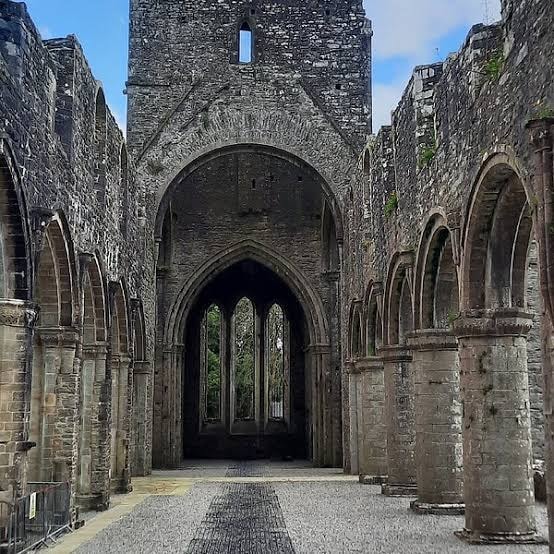
Boyle Abbey was founded during the 12th century by Cistercian monks from Mellifont Abbey in County Louth, supported by the local ruling MacDermott family. The Cistercians were a reforming monastic order that valued prayer, manual work, agriculture and self-sufficient religious communities. Over time, Boyle became one of the most powerful Cistercian monasteries in Connacht — controlling farmland, managing estates, producing food and playing an important role in the medieval economy of the west. The abbey church is the dominant surviving structure. Even without its original roof, it remains incredibly impressive. You can still make out the basic medieval layout including the nave, side aisles, transepts, chancel and central crossing. Walking through it gives a real sense of the scale of religious life here. This was not a tiny rural monastery — it was a major institution.
One of Boyle Abbey's greatest strengths is its architecture. The building shows the transition between Romanesque and Gothic styles — heavy rounded arches and massive stone columns alongside later pointed Gothic elements. Heritage Ireland describes Boyle as an excellent example of the distinctive western style sometimes known as the School of the West, characterised by unusual figures, animals, faces and decorative forms that appear at several medieval churches in western Ireland. Boyle contains some of the finest surviving examples of this regional carving tradition, giving the abbey real importance for anyone interested in Irish Romanesque sculpture. The crossing tower rises dramatically above the centre of the church and gives Boyle Abbey much of its instantly recognisable silhouette, especially impressive from across the surrounding grounds.
The stone carvings are one of the best things to look for when visiting. Boyle Abbey contains a remarkable collection of medieval carved stone — animals, human figures, decorative heads, mythical-looking creatures and unusual ornamental designs. Some are quite small, so do not simply walk through looking at the big arches. Look closely at column capitals, corbels, doorways and smaller pieces of masonry — that is where some of the most interesting details hide. One of the most unusual features is a Sheela-na-gig, a mysterious medieval stone carving depicting an exaggerated female figure. These appear at a number of churches and castles around Ireland and their exact purpose remains debated. Heritage Ireland specifically highlights the Boyle carving as one of the site's features to look out for — it is easy to miss unless you know it is there.
Like many religious houses in Ireland, Boyle Abbey's monastic life came to an end during the upheavals of the 16th century when the English Crown suppressed the monasteries. The site was eventually used as a military stronghold and garrison. Heritage Ireland records that Cromwellian forces occupied Boyle Abbey in 1659, causing serious destruction. During the following centuries, the site was further altered and damaged while being used for military accommodation. It is remarkable that so much medieval architecture survives at all. A 16th- or 17th-century gatehouse also survives and has been restored as the abbey's interpretive centre, where visitors can learn about the Cistercians, the architecture, the military occupation and the site's conservation. Heritage Ireland also highlights a major conservation project involving the careful dismantling and rebuilding of the north wall — a reminder that keeping medieval ruins standing requires ongoing skilled work.
Boyle Abbey is currently closed for the remainder of the 2026 visitor season. Heritage Ireland says the site closed after its 2026 season and looks forward to welcoming visitors again in 2027. The 2026 season ran from 13 March to 16 September, with main daily opening from 8 April to 16 September, 10am to 6pm, and last admission at 5:15pm. Current Heritage Ireland admission prices are: Adult €5, Senior/Group €4, Student/Child €3, Family €13. Both guided and self-guided visits are available when the site is open — a guided tour is especially useful at Boyle because so much of the interesting story is hidden in architectural details. Heritage Ireland currently recommends around 30 minutes for a visit; we would allow 45 minutes to an hour to explore the church, look closely at the carvings, visit the exhibition and take photographs.
One of the best things about visiting Boyle Abbey is that you can immediately continue exploring Boyle town. Boyle is one of County Roscommon's main heritage towns and sits close to Lough Key, the Curlew Mountains and Lough Gara. King House, a restored Georgian mansion in the centre of Boyle, now operates as a historical and cultural centre and makes an excellent companion visit. If you are in Boyle on a Saturday, the Courtyard Market takes place in the grounds of King House from 10am to 2pm, with local food, baking, crafts and organic produce. Lough Key Forest Park is only a short drive away and gives a completely different type of attraction — medieval history at the abbey followed by forest walks, lakes and family activities at Lough Key is a very easy and rewarding half-day combination.
Best Time to Visit
Spring is a good time once the visitor season reopens in 2027 — the surrounding grounds turn green and visitor numbers are still manageable. Summer brings full opening and guided tours. Early September is probably the best time — still open but quieter than peak summer. Autumn and winter: the main visitor attraction is closed outside its seasonal opening. As of October 2026, Boyle Abbey is closed for the year — check Heritage Ireland for 2027 reopening dates before travelling specifically for an interior visit.
Getting There
Boyle Abbey is located in Boyle, County Roscommon, Eircode F52 XE16, just off the N4 Dublin–Sligo road and within walking distance of Boyle town centre. Car, coach and bicycle parking are available. The abbey combines well with King House in Boyle town centre and Lough Key Forest Park, which is a short drive away. Boyle is approximately 30 minutes from Sligo and around 1 hour 45 minutes from Dublin via the N4.
Highlights
Quick Facts
County
County Roscommon
Region
West
Category
Heritage


Keep exploring