Bunratty Castle & Folk Park: Tickets, Hours & Visitor Guide
Bunratty Castle & Folk Park
A medieval castle, a 26-acre folk park, and one of Ireland’s finest family heritage attractions.
About
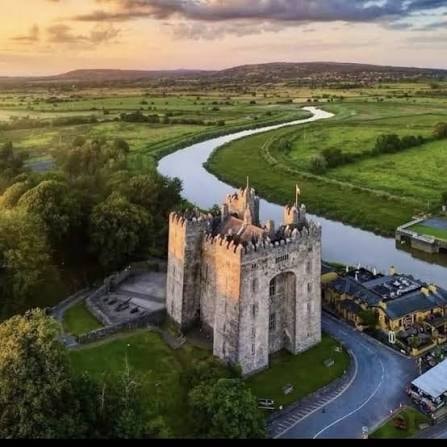
Bunratty Castle rises beside the River Ratty just off the N18 between Limerick and Ennis, about ten minutes from Shannon Airport. The present castle is the fourth built on the site and dates from the 15th century, constructed by the powerful MacNamara family and later held by the O’Briens, Earls of Thomond. The site itself has been strategically important for over a thousand years — the official attraction traces activity here back to a Viking trading camp around AD 970. Unlike the majority of Irish castles, which survive only as roofless ruins, Bunratty has been extensively restored and furnished with an important collection of 15th- and 16th-century furniture, tapestries and works of art. You can move between different levels and rooms, getting a genuine sense of what life inside a medieval castle might have looked like.
The centrepiece of the castle interior is the enormous Great Hall — the room where meals were served, political discussions held, and wealth and status displayed. Stand there and it’s much easier to picture Bunratty as a living stronghold rather than simply an old stone building. The castle’s upper levels provide fantastic views across Bunratty and the surrounding Clare countryside, though the staircases are narrow, steep and confined in the way of genuine medieval construction. The Folk Park is considerably more accessible than the castle itself.
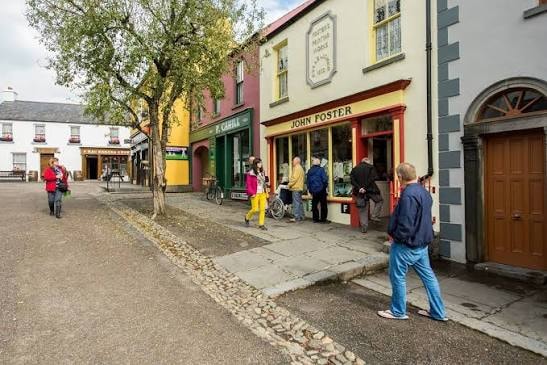
For many families, the Folk Park is actually the highlight of the day. The park covers approximately 26 acres and contains more than 30 buildings recreating rural and village life in 19th-century Ireland. Some buildings were relocated to Bunratty from other parts of the country; others recreate the shops, houses and workplaces of a typical Irish village. The rural section includes traditional cottages and farmhouses representing families from different social backgrounds — the contrast between a simple one-room home and the house of a more prosperous farming family is striking. Furniture, cooking equipment and household objects show what everyday life looked like long before electricity and central heating.
The recreated village street is one of the most enjoyable parts of the Folk Park. Traditional businesses and buildings include shops and trades that would once have been essential to rural communities, and children can physically walk from house to shop to workshop in a way that makes history tangible. Within the Folk Park you’ll also find Bunratty House, a Georgian residence built in 1804 that was home to the Studdarts, the last family to live in the castle before moving into more comfortable surroundings. The Folk Park also includes a working farm with animals, a Viking-themed playground, and a Fairy Trail — features that make Bunratty considerably easier to visit with children than many traditional castle attractions.
Bunratty is also famous for its Medieval Banquet, which takes place inside the castle after the normal daytime visitor experience. Guests are welcomed with traditional honey mead before a four-course meal with music, song and entertainment from the Bunratty Castle Singers. The banquet lasts approximately two hours and has welcomed more than three million guests since it began. Booking is essential. A new permanent interpretive centre dedicated to Dr Brendan O’Regan opened at Bunratty in 2026 — O’Regan played a hugely important role in the development of Shannon Airport and the modern visitor experience around Bunratty.
Best Time to Visit
Bunratty is open year-round apart from its Christmas closure (24–26 December). Summer gives you the liveliest Folk Park experience and the longest daylight hours, but spring and autumn can be excellent as visitor numbers are generally lower. Arrive early in the day — the castle will be quieter and you’ll have plenty of time for the Folk Park afterwards. Bunratty runs a busy programme of seasonal events including Imbolc celebrations, St Patrick’s festivities, medieval combat events, Harvest Day and Christmas events — check the calendar before visiting during school holidays or around Halloween and Christmas.
Getting There
Bunratty Castle & Folk Park is located at Bunratty East, County Clare, V95 TY02, just off the N18 between Limerick and Ennis. It is approximately 10 minutes from Shannon Airport and around 15 minutes from Limerick City. Free visitor parking is available on site throughout the year. Without a car, Bus Éireann services stop nearby and Dublin Coach operates services connecting Bunratty with Dublin, Limerick and Ennis. The nearest major railway stations are Limerick Colbert and Ennis, from where you can continue by bus or taxi.
Insider Tips
Allow at least three to four hours — ideally half a day. The biggest mistake is arriving purely to photograph the castle and assuming you’re finished. Spend an hour exploring the castle properly, then slow down in the Folk Park. Go inside the cottages, walk the village street, and let the children use the playground.
Arrive early. Not only will the castle be quieter, but you’ll have plenty of time for the Folk Park afterwards. Last admission to the Folk Park is 4:30pm and last admission to the castle is 4pm — don’t schedule Bunratty as a late-afternoon stop.
If you’re travelling without children and want something a bit different, consider returning in the evening for the Medieval Banquet. Exploring the castle during the day and then eating in its Great Hall that night makes for a memorable Clare experience. Booking is essential.
Bunratty is only around 10 minutes from Shannon Airport, making it an excellent first or final attraction if you’re flying through Shannon. Just don’t leave four medieval towers, a 26-acre Folk Park and airport security until the final 90 minutes of your trip.
Combine Bunratty with a wider County Clare itinerary. From here you can continue west towards Doolin and the Cliffs of Moher, or south towards Limerick and King John’s Castle. A three-day Clare trip of Bunratty, Doolin and the Burren is one of the strongest heritage itineraries in the west of Ireland.
Highlights
Quick Facts
County
County Clare
Region
West
Category
Heritage


Keep exploring