Galey Bay Castle Roscommon: History & Visitor Guide
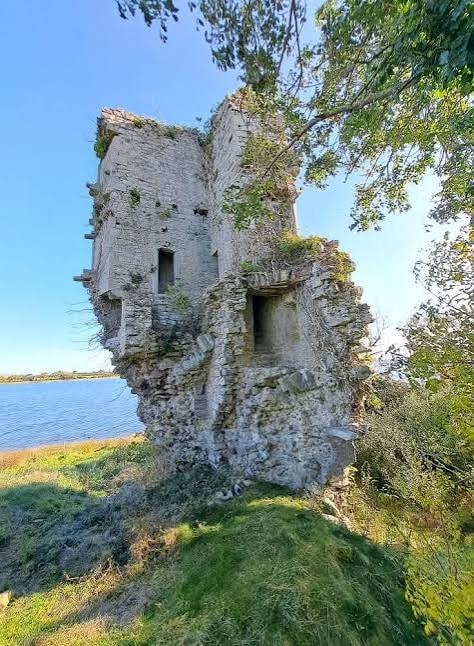
Galey Bay Castle
A ruined medieval tower beside Lough Ree — home of the O'Kelly clan and Ireland's legendary 1351 Christmas feast.
About
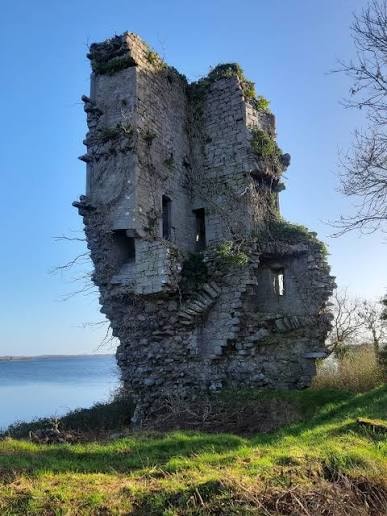
On the western shore of Galey Bay on Lough Ree, the ivy-covered remains of Galey Castle are easy to overlook. Today, only part of the medieval tower house survives. But more than 600 years ago, this quiet corner of County Roscommon was an important stronghold of the O'Kelly clan and the setting for one of the most famous gatherings in medieval Gaelic Ireland — poets, musicians, bards, storytellers and entertainers invited for a huge Christmas celebration in 1351.
Galey Castle was built around 1340 by William Bui O'Kelly, a leading member of the O'Kelly dynasty and Chief of Uí Maine. The O'Kellys were powerful Gaelic rulers associated with the territory of Uí Maine, extending through parts of east Galway and south Roscommon. William became famous as a patron of poets, musicians and Gaelic culture — and one particular gathering at Galey turned him into something of a legend.
At Christmas in 1351, William Bui O'Kelly invited a huge gathering of Ireland's cultural elite to Galey Castle — poets, brehons, bards, harpers, gamesters, jesters and entertainers. The festivities continued beyond Christmas and into the new year, reportedly lasting until St Brigid's Day on 1 February. A contemporary poem known as The Poets of Ireland to One House commemorated the gathering, and William O'Kelly's generosity entered Irish cultural memory. The phrase 'Fáilte Uí Cheallaigh' — the O'Kelly Welcome — is traditionally connected with his hospitality here.
The site may be much older than the medieval castle. The Portrunny heritage project notes evidence of a promontory fort surrounding the castle site, suggesting activity here could stretch back into the Iron Age. Galey Bay has also produced a remarkable archaeological discovery — during the 1980s, a local swimmer found a log boat in the bay, dated to around the 10th century and now preserved at Roscommon Museum. That small discovery tells you just how important Lough Ree once was as a transport route.
Galey's story became much darker during the 17th century. Local heritage accounts record that Galey Castle was besieged during the Cromwellian campaigns in Ireland. According to local tradition, members of the O'Kelly clan captured after the siege were taken to nearby Creggan and hanged on a hill — the place became associated with the Irish name Cnoc an Chrocaire, Hill of the Hangings, later anglicised as Knockcroghery. So if you've ever wondered where that unusual village name came from, Galey Castle is part of the story.Roscommon Castle is also within easy reach, making a very good local history day: Roscommon Castle, then Knockcroghery, then Galey Bay and Portrunny.
The best way to place Galey Castle into the wider local story is through the Portrunny Heritage Trail, developed by the Portrun Development Association to highlight the area's archaeological, natural and cultural heritage. The full mapped trail is roughly 15km and connects Portrunny Harbour, St Diarmaid's Holy Well, Portrunny Church and Graveyard, Inchcleraun Island, Galey Bay and Castle, and Cloonsellan Abbey. Allow 30–45 minutes for the castle itself, or 2–3 hours for the wider heritage route. There is no formal ticket office or visitor centre — this is a historic ruin within a rural lakeside landscape. Wear sensible footwear and do not attempt to enter or climb the ruins.
Highlights
Quick Facts
County
County Roscommon
Region
Midlands
Category
Heritage


Keep exploring