
Hook Lighthouse Wexford: Tours, Tickets & Visitor Guide
Hook Lighthouse
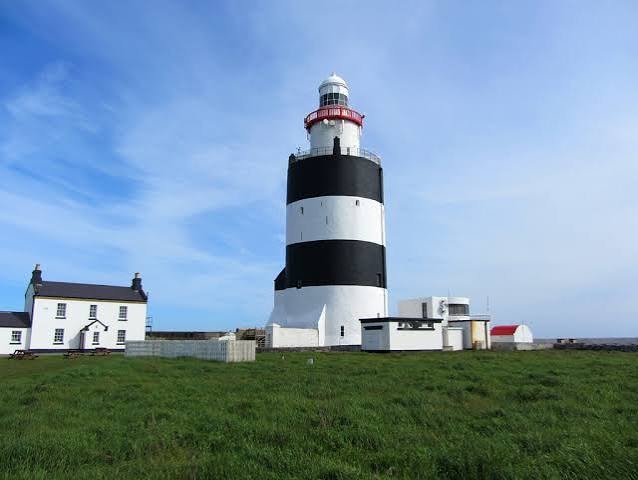
The oldest intact operational lighthouse in the world — standing at the tip of the Hook Peninsula for more than 800 years.
About
Standing at the very tip of the Hook Peninsula in County Wexford, Hook Lighthouse has been guiding ships through the waters around Waterford Harbour for more than 800 years. The present medieval tower was built during the early 13th century and is regarded as the oldest intact operational lighthouse in the world. Long before the tower existed, monks are believed to have kept warning fires burning on the headland to help sailors avoid the dangerous rocks around Hook. The area became known as Rinn Dubháin — Dubhán's Headland — after the monk who is said to have established a monastery here during the fifth century.
The construction of the great stone tower is associated with William Marshal, Earl of Pembroke and Lord of Leinster — one of the most powerful and influential knights in medieval Europe. Through his marriage to Isabella de Clare, daughter of Strongbow and Aoife MacMurrough, Marshal inherited extensive territories in Ireland. He developed New Ross as a major port, but ships approaching it first had to safely navigate the dangerous waters around Hook Head and Waterford Harbour. So Marshal had a lighthouse tower built. Its purpose was simple but enormously important: guide ships safely towards his new port. The tower was purpose-built as a light tower — not an old building later converted — and much of that original medieval structure remains today. William Marshal also built Trim Castle in County Meath — the largest Anglo-Norman castle in Ireland — and the two sites together tell the story of Norman power in medieval Ireland better than almost anywhere else.
The best way to experience Hook Lighthouse is the guided tower tour. Access to the tower is by guided tour only — you can't wander up independently. The tour lasts approximately 45 minutes and takes you through the different levels of the medieval tower, covering the story of St Dubhán, William Marshal, the construction of the lighthouse and the generations of lightkeepers who maintained the beacon. Then comes the climb: 115 steps. These aren't modern stairs. You're inside an 800-year-old stone tower. Some sections are narrow, the stone can become damp, and the steps have been worn by centuries of use. Hold the handrail and take your time. Then you reach the balcony.
Step onto the viewing balcony and you've got a 360-degree panorama. Waterford Harbour lies to the west. The Celtic Sea stretches south. The Hook Peninsula runs away behind you. The lighthouse is surrounded by open sea on three sides, which makes the top feel wonderfully exposed — and you suddenly understand exactly why this point was chosen for a lighthouse. For hundreds of years, the light above your head helped guide ships safely through notoriously dangerous coastal waters. And this isn't a retired lighthouse preserved purely for tourism. Hook Lighthouse is still operational. Irish Lights operates the navigational light, which today flashes approximately every three seconds.
After the tour, don't immediately get back into the car. Spend time exploring the coastline around the lighthouse. The exposed limestone landscape is beautiful — pools and channels appear among the rocks, waves crash dramatically against the shoreline, and the lighthouse looks brilliant from almost every angle. The rocks around Hook Head are also fascinating in their own right: much of the point consists of Carboniferous limestone containing fossils, meaning you're walking across rock formed hundreds of millions of years ago. Keep an eye on the rock surfaces and you may notice fossil patterns. Hook Head is also an excellent place to watch for marine wildlife — seals, dolphins and whales can all be seen in the waters around the peninsula, with winter particularly good for whale watching.
The lighthouse should be only one part of your day. The wider Hook Peninsula is packed with beaches, historic sites, small harbours and coastal scenery. Tintern Abbey — a Cistercian abbey founded around 1200, also by William Marshal — is one of the best places to combine with Hook Lighthouse, and the two connect directly through the Norman history of southeast Ireland. Nearby Slade Harbour is a lovely little stop, with fishing boats within the harbour walls and the exposed coastline stretching around the headland. Baginbun Beach is historically significant as the landing point of Anglo-Norman forces in 1170, and Duncannon on the western side of the peninsula has a long sandy beach and the impressive Duncannon Fort with more than 450 years of history.
Best Time to Visit
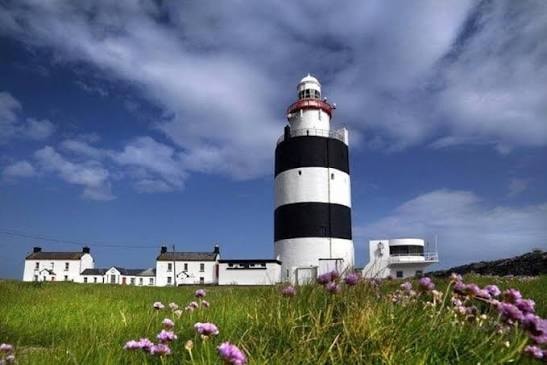
There's genuinely something at Hook Lighthouse throughout the year. Summer gives you longer days and the easiest conditions for exploring the peninsula, but this is also when visitor numbers are highest — book your tour in advance during July and August. Spring can be quieter while still providing plenty of daylight. Autumn brings dramatic skies and beautiful coastal light. Winter can be spectacular when large Atlantic swells crash against the rocks, and it's also one of the better periods to look for whales offshore. For photography, early morning or late afternoon is ideal — the lighthouse looks fantastic when low sunlight hits the black-and-white tower.
Getting There
Hook Lighthouse is located at Hook Head, Churchtown, County Wexford, Y34 KD93 — at the southern tip of the Hook Peninsula. It's roughly 40 minutes from New Ross, 50 minutes from Wexford Town, and around one hour from both Waterford City and Rosslare Harbour. If you're travelling between Wexford and Waterford, the Passage East Car Ferry makes Hook Lighthouse a great addition to a southeast Ireland road trip. There is a large free visitor car park suitable for cars, minibuses and coaches. Guided tours run hourly from 10am–4pm (September–June) and every half hour from 10am–5pm (July–August). The lighthouse is open daily 9:30am–5pm and closes 20–25 December.
Insider Tips
Book your tour in advance, especially during summer. Tour numbers are limited and Hook Lighthouse recommends booking ahead. If you've booked, arrive at least 15 minutes before your scheduled time to check in. During July and August tours run every half hour, but this is also when the lighthouse receives its largest visitor numbers — you don't want to drive all the way to the bottom of the Hook Peninsula and find every tour is full.
Give the Hook Peninsula a full day if you can. Start with the lighthouse before the busiest tours arrive, then explore the coast around Hook Head. Afterwards, stop at Slade Harbour, continue towards Baginbun Beach, and finish with Tintern Abbey or Duncannon. The peninsula rewards slow exploration — there are beaches, historic sites, small harbours and coastal scenery at every turn.
Wear comfortable footwear with grip. Even on a dry day, the lighthouse's old stone staircase can be damp and the steps have been worn smooth by centuries of use. Outside, Hook Head is extremely exposed — a beautiful sunny morning can still come with a fierce sea breeze. Keep a windproof or waterproof jacket handy. And if the weather is wild? That's when Hook can look its most dramatic.
Don't miss the Lightkeeper's House Café after your tour. It's located inside the former principal lighthouse keeper's cottage and serves coffee, homemade cakes, scones and more substantial food, with seafood regularly featuring on the menu. There are few better places to sit with a coffee while watching waves crash against the rocks outside — and on the right day, you might spot something moving offshore.
Highlights
Quick Facts
County
County Wexford
Region
South East
Category
Heritage


Keep exploring