
Muckross Abbey Killarney: History, Parking & Visitor Guide
Muckross Abbey
A remarkably complete 15th-century Franciscan friary in Killarney National Park, free to visit and home to what may be Ireland's oldest yew tree.
About
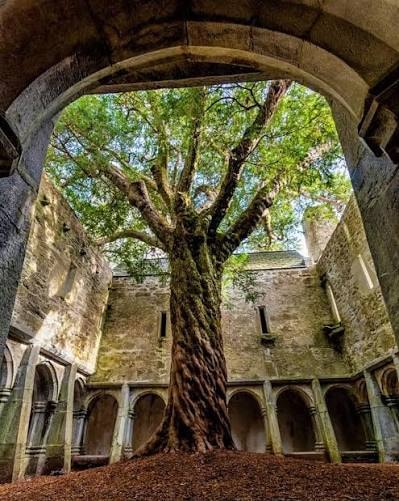
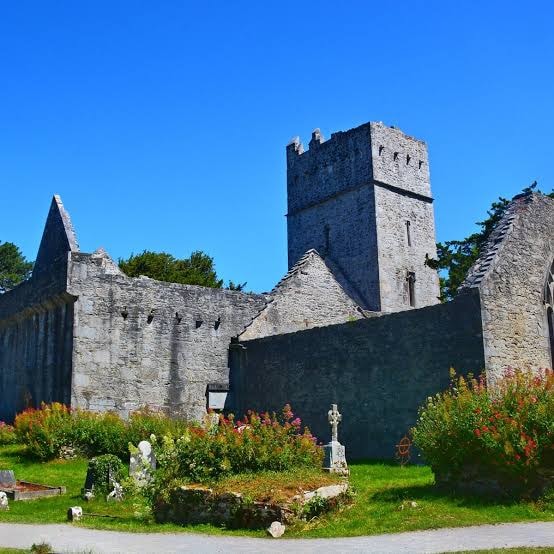
Hidden among the woodlands of Killarney National Park, Muckross Abbey is one of the most atmospheric historical sites in County Kerry. Its roofless church, remarkably complete cloisters, square central tower and ancient graveyard make it feel very different from the busier attractions nearby. Then there's the yew tree — growing right in the middle of the cloister courtyard is an enormous old yew traditionally said to be as old as the friary itself. The whole thing is completely free to visit, making it one of the easiest places to recommend around Killarney.
Technically, Muckross Abbey isn't actually an abbey — it was a Franciscan friary. The present friary was founded in 1448 for Observant Franciscan friars, with the Gaelic chieftain Donal McCarthy Mor as patron. The McCarthy family was one of the most powerful Gaelic dynasties in Munster, and their support helped establish the impressive complex that survives today. Religious activity at Muckross may be much older still — the National Parks service records a tradition that St Fionan founded an earlier monastery here during the 6th century, almost 900 years before the surviving medieval friary was built.
The cloisters are probably the highlight. Stone arches surround a square courtyard at the centre of the friary, and right in the middle stands the ancient yew tree. Heritage Ireland describes it as likely Ireland's oldest yew tree, its branches stretching over the ruined stonework to create one of the most memorable scenes anywhere in Killarney National Park. The huge square tower is another distinctive feature — Discover Ireland notes it was added after the main church and is unusual because it is as wide as the church itself, something not found in other Franciscan towers in Ireland. The friary church contains large Gothic windows and substantial surviving walls, with light pouring through the openings and changing constantly with the Kerry weather.
The graveyard surrounding the ruins is still in use, with burials continuing each year. Muckross Abbey is also the burial place of several notable Gaelic poets, including Geoffrey O'Donoghue, Aodhagán Ó Rathaille and Eoghan Rua Ó Súilleabháin. The Franciscan community faced repeated disruption over the centuries and were finally driven from Muckross during the Cromwellian period in 1652, after which the buildings gradually fell into ruin. Fortunately, enough survived to make Muckross one of the most complete Franciscan sites in Ireland today.
Muckross Abbey sits within the walking and cycling network of Killarney National Park and is a short walk from parking on the N71 Killarney–Kenmare road. It can also be reached from Muckross House, from Killarney Town, or as part of a wider National Park route. Discover Ireland specifically recommends exploring the Muckross and Dinis area on foot, by bicycle or by jaunting car. The Muckross Lake Loop takes roughly three hours, with optional trips towards Torc Waterfall adding extra time.Torc Waterfall is only around 7km from Killarney Town and sits within the same National Park landscape — combining Muckross Abbey, Muckross House and Torc Waterfall is one of the classic Killarney itineraries.
Accessibility is limited within the medieval ruins — expect uneven stone floors, steps, narrow historic openings and grass and gravel surfaces. Dogs are welcome in Killarney National Park but must be kept on a lead at all times. Allow around 45 minutes to an hour for the abbey itself, but we'd strongly recommend combining the visit with other parts of Killarney National Park and allowing at least half a day. Muckross Abbey is located inside Killarney National Park, south of Killarney Town and close to Muckross House, approximately 5–6km from Killarney Town centre.
Highlights
Quick Facts
County
County Kerry
Region
Munster
Category
Heritage


Keep exploring