
Queen Maeve Trail Sligo: Walk, Parking & Visitor Guide
Queen Maeve Trail
A strenuous 2.3km climb through woodland and mountain terrain to the summit of Knocknarea — where a 5,000-year-old Neolithic cairn and panoramic views over Sligo Bay await.
About
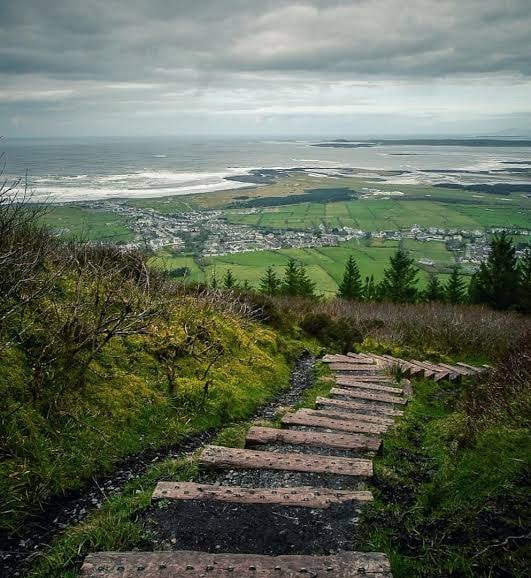
Rising above Strandhill and Sligo Bay, Knocknarea is one of the most recognisable mountains in County Sligo. And the Queen Maeve Trail is one of the best ways to climb it. The route winds through woodland, climbs steadily on gravel paths and timber steps, crosses an elevated bog bridge and eventually reaches the summit of Knocknarea — where the enormous prehistoric monument known as Queen Maeve's Cairn dominates the skyline. The trail is only around 2.3km, but don't let that number fool you. This is a strenuous climb, with approximately 300 metres of ascent, and Discover Ireland recommends allowing just under two hours. The reward? Some of the best views in County Sligo.
The Queen Maeve Trail is on Knocknarea Mountain, close to Strandhill and around 7.5km west of Sligo Town. The trail approaches Knocknarea from the northern side and climbs through woodland towards the summit — this is different from the older, more direct Knocknarea route that starts from the eastern side of the mountain. When planning your visit, make sure you're heading for the Queen Maeve Trail trailhead rather than assuming every Knocknarea car park leads to the same route. Free parking is available at the trailhead. The route is linear rather than a loop, meaning you climb to the summit and return using the same trail. Allow around two hours — we'd personally leave 2½ hours in your itinerary to take breaks, enjoy the views and descend without rushing.
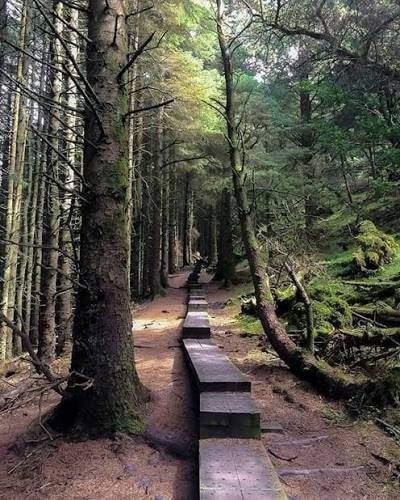
The first part of the walk passes through woodland, giving the Queen Maeve Trail a very different feel from many exposed mountain climbs. The route then steadily gains height through forest before emerging onto more open mountain terrain. Terrain includes gravel paths, timber steps, gravel steps, forest tracks, an elevated bog bridge and mountain terrain approaching the summit. Information points and QR-code posts along the route explain some of Knocknarea's archaeology, mythology and natural environment — conveniently positioned near some of the steeper sections where you may already be looking for an excuse to stop. The elevated bog bridge is one of the more unusual features, carrying walkers across wet mountain terrain while protecting the surrounding habitat from erosion.
At the summit you'll reach Queen Maeve's Cairn, also known as Misgaun Maeve. This enormous prehistoric monument stands around 10 metres high and 60 metres across at its base. Discover Ireland estimates that the stones used to construct it weigh approximately 30,000 metric tonnes. According to Irish legend, Queen Maeve of Connacht was buried upright beneath the cairn, facing her enemies with a spear in her hand. But the archaeological monument is far older than the legendary Iron Age queen — Discover Ireland dates the cairn to approximately 3000 BC, making it a Neolithic monument. Its association with Queen Maeve is therefore considered legendary rather than historical. The cairn has never been excavated, and Discover Ireland believes it probably covers a passage tomb similar to those found at Carrowkeel and in the Boyne Valley. Do not climb the cairn, remove stones or add stones — enjoy it from ground level.
On a clear day, the summit views are brilliant — across Sligo Bay, Coney Island, Rosses Point, Strandhill and towards the Slieve League Mountains in Donegal. Discover Ireland says summit panoramas can extend across parts of Sligo, Leitrim and Donegal. This is one of those short climbs where the scenery feels disproportionate to the distance walked. Knocknarea rises to around 327 metres above sea level, but because it rises so sharply from the low coastal landscape around Strandhill and Sligo Bay, it dominates the skyline. The huge cairn on top makes it even more recognisable — you'll see it from Strandhill, Rosses Point and Sligo Town. Wear decent footwear: walking shoes or trail runners are ideal in good conditions, and waterproof footwear is better after prolonged rain. Bring a light waterproof jacket — blue sky at the car park is not a legally binding agreement with the weather.Strandhill is right beside the trailhead, making it the perfect place to finish — coffee, lunch, pubs and seaweed baths are all within easy reach after the climb.
If Knocknarea's prehistoric history interests you, nearby Carrowmore Megalithic Cemetery is the obvious next stop. The wider Sligo landscape contains one of the richest concentrations of prehistoric monuments in Ireland — Queen Maeve's Cairn, Carrowmore and the monuments around Carrowkeel are all part of this extraordinary archaeological region. Every July, Strandhill hosts the Warriors Run, where competitors race from Strandhill up Knocknarea and back — inspired by the legends surrounding Queen Maeve. The trail can be walked year-round in suitable weather, though spring through early autumn gives the best conditions and greatest chance of those big summit views. If the summit is buried in low cloud and the weather is deteriorating, leave it for another day — the view is a huge part of the experience.Carrowkeel Passage Tombs lie farther south in County Sligo and make a perfect companion visit — Discover Ireland specifically compares the likely structure beneath Queen Maeve's Cairn with the passage tombs at Carrowkeel.
Highlights
Quick Facts
County
County Sligo
Region
Connacht
Category
Mountains


Keep exploring