
Céide Fields Mayo: Tickets, Hours & Visitor Guide
Céide Fields
The most extensive Stone Age monument in the world — an ancient farming landscape buried beneath the blanket bog of north Mayo for almost 6,000 years.
About
Céide Fields — located at Glenurla, Ballycastle, County Mayo — contains the oldest known stone-walled field systems in the world, extending across around 1,500 hectares beneath the bog. Heritage Ireland dates the farming landscape to around 3500 BC, during Ireland's Neolithic period — long before Stonehenge reached its final form or the Great Pyramid of Giza was built. The ancient landscape includes stone-walled fields, farm enclosures, dwelling areas and megalithic tombs. When the first farmers lived here, the landscape was woodland and productive farmland. Over thousands of years, wetter climatic conditions allowed peat to develop, the bog gradually spread, and the entire farming landscape disappeared beneath metres of peat. Ironically, the same bog that hid the landscape also helped preserve it.
The modern discovery began in the 1930s when a local schoolteacher named Patrick Caulfield was cutting turf and noticed lines of stones beneath the bog. He realised they couldn't have been placed there recently — the stones had to be older than the peat growing above them. Around 40 years later, his son Professor Seamus Caulfield, an archaeologist, began investigating the landscape more systematically with his students. Excavations revealed ancient walls, fields, settlement areas and evidence of the farming communities who had lived here thousands of years earlier. One of the most striking techniques used at Céide involves probing through the peat — ancient stone walls may sit up to four metres beneath the bog, and guides can demonstrate how long probes are pushed down through the soft peat until they meet buried stone. On guided visits, you may even get the chance to try locating a buried Neolithic wall yourself.
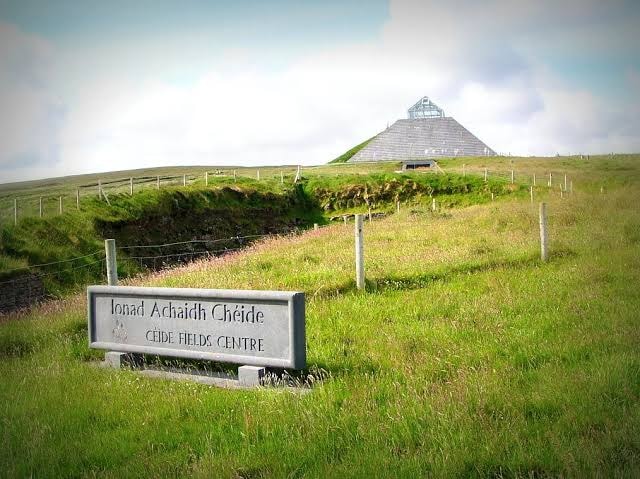
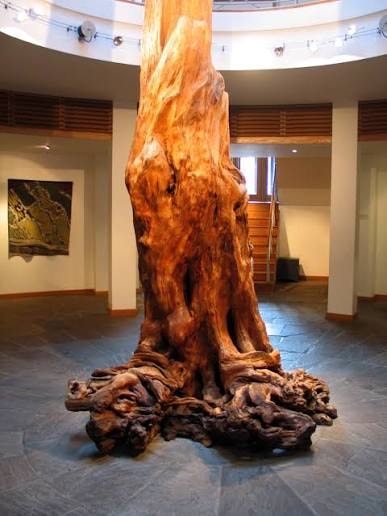
The unusual pyramid-shaped Céide Fields Visitor Centre opened in 1993. Discover Ireland describes it as a partly limestone, partly peat-clad structure with a glass lantern at the top — a building that won architectural awards. But the most striking feature is inside: the centre was designed around a preserved pine tree from the ancient bog landscape, around 4,300–4,500 years old, which rises dramatically through the centre of the building. The modern interactive exhibitions explore the natural landscape, the Neolithic farming community, the formation of blanket bog, archaeology and the geology of the north Mayo coastline. Heritage Ireland says the current presentation includes immersive video and interactive exhibits designed for visitors of all ages. A glass rooftop viewing area gives visitors an elevated view of the ocean even when Atlantic weather makes outdoor exploration uncomfortable.
Beside the visitor centre, 110-metre-high cliffs overlook the Atlantic Ocean. A viewing platform gives enormous views across the north Mayo coastline — spectacular in clear weather and equally dramatic in a storm. The bog itself is an important ecosystem, with wildlife including Irish hares, frogs, lizards and skylarks, and plant life including bog cotton, heathers, orchids, sundews, milkworts, mosses and lichens. The sundew is particularly interesting — a tiny carnivorous plant that survives in nutrient-poor bog conditions by trapping insects. Guided tours are available and are one of the best ways to understand the site. Without context, a low stone wall disappearing into peat may not look particularly dramatic. Once somebody explains you're looking at the remains of a field boundary constructed almost 6,000 years ago, it becomes a very different experience.
Céide Fields is open daily from 10am–6pm (last admission 5:15pm) from 12 March to 4 November 2026. Admission is €5 for adults, €4 for seniors and groups, €3 for children and students, and €13 for families. Discover Ireland notes that admission is free on the first Wednesday of every month from March through October. Parking is free. There is a café onsite. The obvious pairing is Dún Briste at Downpatrick Head, only around 14km away — Discover Ireland specifically recommends visiting the two attractions together. We'd do Downpatrick Head first for the outdoor coastal walk, then Céide Fields for the visitor centre, exhibitions and café. Allow roughly one hour at Downpatrick Head and another 2–3 hours at Céide Fields.
Best Time to Visit
Céide Fields is open 12 March–4 November 2026, daily 10am–6pm (last admission 5:15pm). Spring is quieter and excellent for seeing bog plants beginning to emerge. Summer offers the longest days and generally easiest outdoor conditions. September and October are fantastic for dramatic Atlantic scenery and autumn colours in the bog — the site is currently open throughout October 2026. Normal public opening ends 4 November, although winter visits may be possible by booking. For most visitors, late spring through early autumn is ideal. Remember that admission is free on the first Wednesday of every month from March through October.
Getting There
Céide Fields Visitor Centre is located at Glenurla, Ballycastle, County Mayo, F26 PF66 — approximately 8km west of Ballycastle village on the R314 coastal road. Free parking is available at the visitor centre. The site is around 14km from Downpatrick Head and Dún Briste, making the two attractions a natural pairing on a north Mayo day. Heritage Ireland recommends protective clothing and sturdy footwear for outdoor sections of the site. Assistance dogs only within the managed attraction.
Insider Tips
Take the guided tour if one is available during your visit. Without context, a low stone wall disappearing into peat may not look particularly dramatic. Once a guide explains you're looking at a field boundary constructed almost 6,000 years ago — and demonstrates how buried walls are found using probes — the archaeology makes far more sense. Ask if you can try probing for a buried Neolithic wall yourself.
Combine with Dún Briste at Downpatrick Head, only around 14km away. Discover Ireland specifically recommends visiting the two together. We'd do Downpatrick Head first for the outdoor coastal walk, then Céide Fields for the visitor centre, exhibitions and café. Allow roughly one hour at Downpatrick Head and 2–3 hours at Céide Fields.
Check whether your visit falls on the first Wednesday of the month between March and October — admission is free on those days. At €5 for adults it's already excellent value, but free is better.
Bring proper outdoor clothing and sturdy footwear. Parts of the experience are outside on uneven bog terrain, and conditions on this exposed north Mayo coastline can change rapidly. Heritage Ireland specifically recommends protective clothing. Bring a waterproof even if the weather looks reasonable when you leave Ballycastle.
Don't miss the cliff-edge viewing platform. Even if archaeology isn't your main interest, the 110-metre Atlantic cliffs beside the visitor centre are spectacular. Use the designated viewing areas, stay behind safety barriers, and keep children close — particularly in strong winds.
Highlights
Quick Facts
County
County Mayo
Region
West
Category
Heritage


Keep exploring