Fore Abbey Westmeath: Seven Wonders, Walk & Visitor Guide
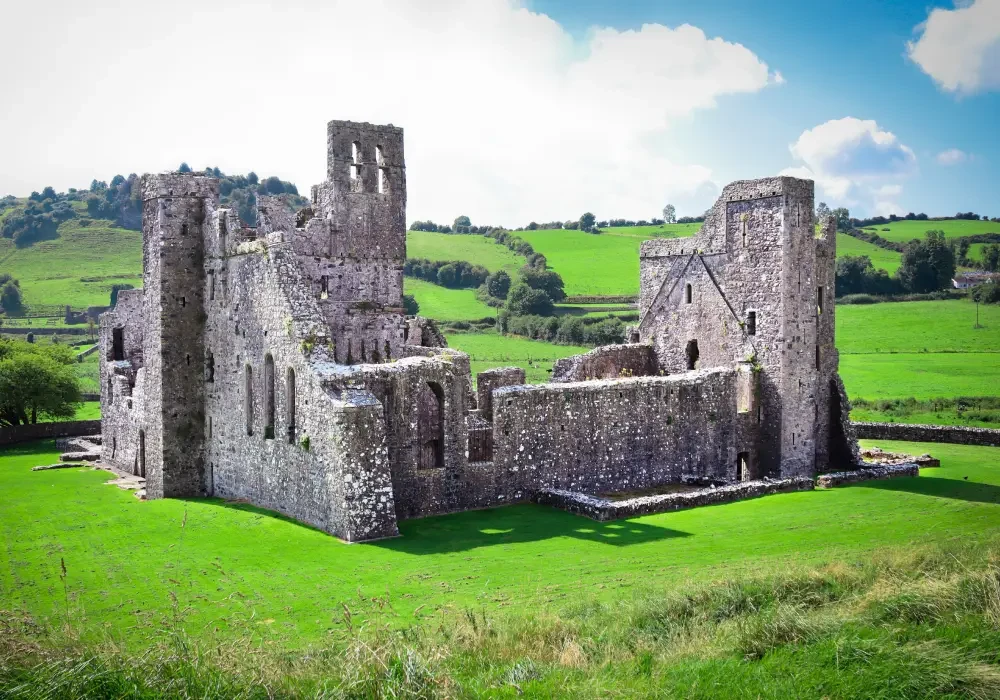
Fore Abbey
A free medieval monastic landscape in County Westmeath — home to the Seven Wonders of Fore, ancient churches, holy wells and two surviving town gates.
About
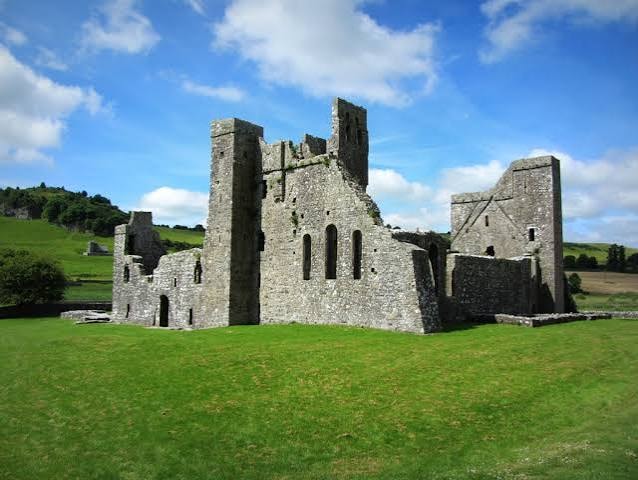
Hidden in a peaceful green valley in north County Westmeath, Fore Abbey is one of the most atmospheric monastic sites in Ireland. Unlike many historic ruins where you arrive, look around for twenty minutes and leave, Fore feels more like an entire medieval landscape. There's the huge ruined Benedictine priory, St Feichin's Church, an anchorite's cell, holy wells, old town gates, wayside crosses and a collection of local legends known as the Seven Wonders of Fore. Best of all, admission is completely free and the site is open all year.
Fore's religious history stretches back to the 7th century. St Feichin is believed to have founded a Christian monastery here around AD 630, and by the time of his death, tradition records around 300 monks living in the community. That makes Fore far older than the huge stone abbey ruins visitors see today — the valley had already been a significant religious centre for centuries before the later Benedictine priory was built. Following the Anglo-Norman arrival in Ireland, Hugh de Lacy, Lord of Meath, established a Benedictine priory here in the late 12th or early 13th century, connected with the monastery of St Taurin at Évreux in Normandy, France. Much of what survives today belongs to this later medieval period.
The famous Seven Wonders of Fore mix history, religious tradition and local folklore. They include the monastery built upon the bog, the mill without a race, the water that flows uphill, the tree that won't burn, the water that won't boil, the lintel raised by St Feichin's prayers, and the anchorite in a stone. Hunting them out is part of the fun of visiting Fore. Near St Feichin's Church is a holy well where tradition claims the water will not boil. The huge stone lintel above the doorway of St Feichin's Church is said to have been raised into position through St Feichin's prayers. Archaeological work has even found evidence supporting the idea that the medieval monastery really was constructed over boggy ground.
Fore wasn't only a monastery — it also developed into a medieval walled settlement. The Irish Walled Towns Network explains that Fore was fortified during the 14th and 15th centuries, probably because its position outside the Pale made it vulnerable to attack. Two substantial medieval stone gates still survive, giving you an idea of what entering medieval Fore might once have felt like. There are also 18 historic Fore crosses scattered across the surrounding landscape, spread over approximately 10km of roads and fields around the village. The best way to explore everything is by walking St Feichin's Way, a 3km looped trail around the village and monastic landscape that links the main sites and legends.
The Fore Abbey Coffee Shop operates from a restored farm building near the abbey and serves refreshments, home baking and tourist information, with public toilets and local crafts also available. Nearby, Fore Distillery is a small craft distillery producing rum and poitín inspired partly by the area's monastic history — guided tours can be arranged on request, followed by tastings at the Barrel & Bean café. Accessibility is limited in parts of the site; Heritage Ireland lists restricted access for visitors with disabilities and uneven walkways, so proper walking shoes are recommended.Hill of Uisneach is an excellent companion destination — together they build a strong Ancient Westmeath day, with Uisneach covering mythology and kingship and Fore giving you early Christianity and medieval monastic life.
Fore Abbey is located in the tiny village of Fore in County Westmeath, N91 TN92, roughly 30 minutes north of Mullingar and close to Castlepollard and Lough Lene. Free visitor parking is available close to the site, with coach parking also listed by Heritage Ireland. Allow around 2 hours to explore the abbey, St Feichin's Church, the Seven Wonders, the town gates and part of St Feichin's Way. Loughcrew Megalithic Cemetery is only about 10km away, making for an excellent history day combining Neolithic passage tombs with early Christian and medieval Ireland. Trim Castle is around 32km away and also has a full guide on Travel Through Ireland.
Highlights
Quick Facts
County
County Westmeath
Region
Midlands
Category
Heritage


Keep exploring