
Moore Hall Mayo: Woodland Walk, History & Visitor Guide
Moore Hall
A roofless Georgian mansion hidden in woodland above Lough Carra — one of Mayo's most atmospheric and history-laden places.
About
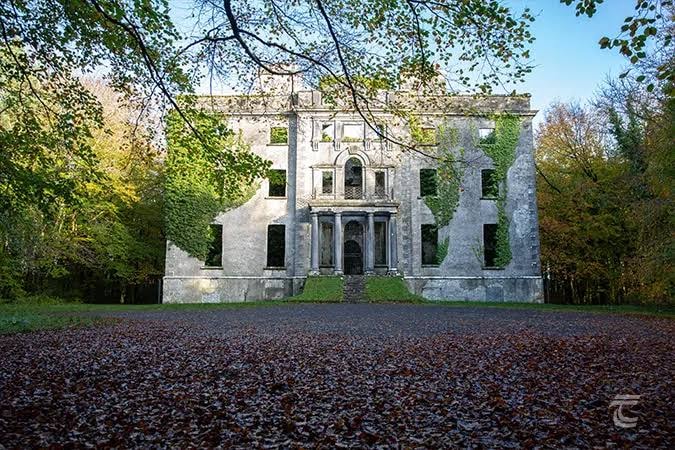
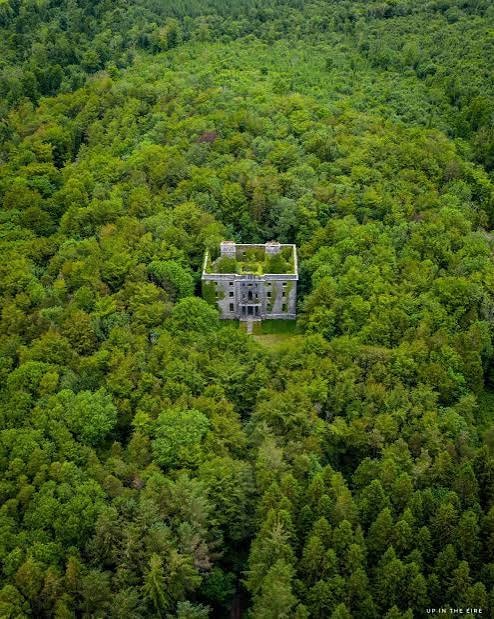
Hidden among mature woodland overlooking the beautiful waters of Lough Carra, Moore Hall is one of County Mayo's most atmospheric historic places. At the centre of the estate stands the roofless shell of a once-grand Georgian mansion. Empty windows stare out through the trees. Ivy climbs across the limestone walls. Old paths disappear into the surrounding woodland. And scattered around the estate are reminders of a family whose story became intertwined with some of the most important events in modern Irish history.
This was the home of the Moore family of Mayo. One member became a leader during the 1798 Rebellion. Another used his fortune to help tenants during the Great Famine. One became an influential Irish politician. And another became the celebrated novelist George Augustus Moore, associated with the Irish Literary Revival. Then, during the Irish Civil War, Moore Hall was burned. The house was never rebuilt. Today, however, the estate has become a wonderfully peaceful place for a woodland walk, with a free car park, picnic area, toilets and an easy forest trail of around 3km.
Moore Hall is situated close to Carnacon in County Mayo, on the eastern side of Lough Carra. It's around 11km north of Ballinrobe and approximately 20km south of Castlebar. The estate sits in beautiful countryside roughly between Ballinrobe, Castlebar and Claremorris, making it very easy to incorporate into a wider Mayo road trip. You're also only a short drive from Ballintubber Abbey, while Cong, Westport and the wider Joyce Country landscape are all within reach.
The main Moore Hall walk is an easy loop through the woodland, approximately 3km in length. Allow around 1½ hours, though you can certainly walk it more quickly — there's plenty to stop and look at along the way. The route takes you through mixed woodland before reaching the old estate buildings and eventually the ruins of Moore Hall itself. You'll also pass the former coach house and can explore the area around the old walled garden, before the route loops back towards the picnic area and car park.
The Moore Hall walk is considered easy. Most of the route follows forest roads and gravel paths rather than rough mountain terrain. You don't need hiking experience, there are no serious climbs, and comfortable walking shoes should be sufficient in decent weather. After rain, we'd still wear something reasonably waterproof because forest tracks can become wet and muddy in places.
The woodland is an important part of the experience. The trail passes through a mixture of broadleaf and conifer trees, including beech, ash, Scots pine and spruce. In spring and summer the estate can feel incredibly green. But we'd argue that autumn might be the best time to visit Moore Hall. The trees surrounding the ruined mansion turn gold, orange and brown. Fallen leaves cover the paths. And the old house appears through the woodland like something from a ghost story.
The story of Moore Hall begins with George Moore, born in County Mayo in 1729. Moore travelled to Spain and made a considerable fortune in Alicante through business interests including wine, building and shipping. After returning to Ireland and purchasing extensive lands in Mayo, he chose Muckloon Hill overlooking Lough Carra as the location for his new family home. Construction began in 1792 and was completed in 1796. The house became the centrepiece of an estate covering more than 12,000 acres.
One of the most fascinating members of the family was John Moore, George Moore's eldest son. During the 1798 Rebellion, French forces under General Humbert landed at Killala in County Mayo. Irish rebels joined the French troops as they advanced across the county, famously defeating government forces at Castlebar in the battle remembered as the Races of Castlebar. In the aftermath, a short-lived Republic of Connacht was declared — and John Moore was appointed its president. He died in captivity in Waterford in 1799.
Another important member of the family was George Henry Moore, born at Moore Hall in 1810. He became an MP for Mayo and was involved in the tenant-right movement and Irish politics. During the Great Famine, his horse Coranna won the Chester Cup in 1846, and he reportedly used a significant amount of his winnings to support people on his estate. Historical records describe him sending money for famine relief and helping tenants with livestock and food — making the Moore family's story considerably more complicated than simply that of another wealthy landed family.
Perhaps the internationally best-known member of the family was the writer George Augustus Moore. Born at Moore Hall in 1852, he eventually moved to Paris, where he became immersed in the city's artistic and literary world. He knew influential painters and writers and was even painted by Édouard Manet. Moore went on to become an important novelist and short-story writer, associated with the development of modern Irish literature. After returning to Ireland he mixed with leading figures of the Irish Literary Revival, including W.B. Yeats, Lady Gregory and Douglas Hyde.
The story of the house came to a dramatic end during the Irish Civil War. On the night of 31 January 1923, Moore Hall was deliberately burned by anti-Treaty forces. A telegram sent the following morning by the estate steward contained the devastating news that Moore Hall had been burned and nothing had been saved. The house was never rebuilt. Its roof disappeared, the interiors were destroyed, and over the following decades the surrounding woodland gradually enclosed the surviving shell. The ruin you see today is the result.
Don't leave immediately after seeing the house. Close to Moore Hall you'll find the remains of the estate's walled garden, which would once have been an important part of the functioning estate. If you've got time, the Moore family burial ground at Kiltoom is located close to the estate — follow the road from the main car park for a short distance before taking the signposted path through the beech woodland. George Augustus Moore himself isn't buried there — after his death in London in 1933, his ashes were returned to Mayo and placed on Castle Island in Lough Carra.
Moore Hall and the woodland walk are free to visit. There's currently no admission charge for the estate and parking is also free. Coillte lists a large car park, picnic area, walking trails and toilet facilities at the site. That makes Moore Hall a very easy spontaneous stop — no tickets, no booking, no trying to squeeze your car onto the side of a narrow mountain road. Park up, put on comfortable shoes and head into the forest.
One of the easiest attractions to combine with Moore Hall is Ballintubber Abbey. Founded in 1216, the abbey has an extraordinary history and remains in use more than 800 years later. It's also traditionally associated with the ancient pilgrimage route towards Croagh Patrick. Moore Hall and Ballintubber Abbey work brilliantly together because they're completely different — one is a ruined Georgian mansion hidden in woodland, the other is a medieval abbey with centuries of continuous religious history. They're close enough to visit on the same trip and together give you two completely different chapters of Mayo history.
Insider Tips
Don't just walk directly to Moore Hall and turn around. Follow the full woodland loop, explore the old walled garden and then, if you've got time, take the short detour towards the Moore family burial ground at Kiltoom. Autumn is particularly beautiful here — the trees surrounding the ruined mansion turn gold and orange, and the old house appears through the woodland like something from a ghost story.
Combine Moore Hall with Ballintubber Abbey. They're close enough to visit on the same trip and together give you two completely different chapters of Mayo history. One is a ruined Georgian mansion hidden in woodland. The other is a medieval abbey with centuries of continuous religious history.
When the ruined mansion finally appears through the trees, stop for a second before reaching for the phone. It's one of the most atmospheric arrivals you'll find on an easy woodland walk in Mayo. Bring drinks and snacks — there's no café at the house itself, but the picnic area is a lovely place to stop after completing the loop.
Highlights
Quick Facts
County
County Mayo
Region
West
Category
Heritage


Keep exploring