
Caves of Keash Sligo: Walk, Parking & Visitor Guide
Caves of Keash
Seventeen limestone caves, ancient mythology and sweeping Sligo views on the slopes of Keshcorran Mountain.
About
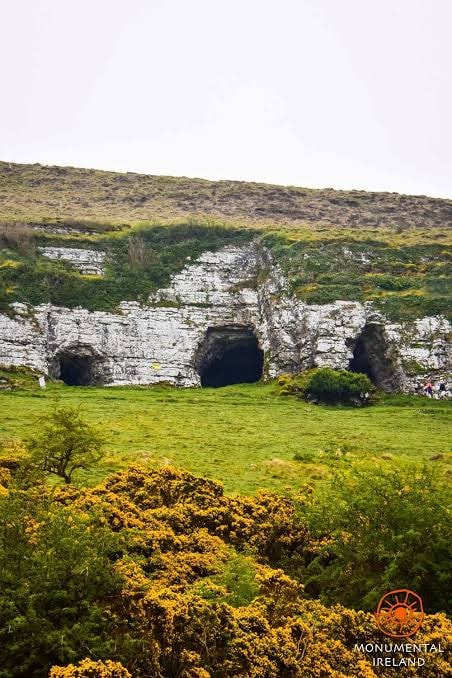
High on the western slopes of Keshcorran Mountain in County Sligo, a series of dark openings puncture the limestone hillside. From a distance, they almost look like windows. Get closer and you'll discover one of the most fascinating places in the northwest of Ireland. The Caves of Keash — also known as the Keash Caves, Caves of Kesh, or Keshcorran Caves — are a collection of 17 limestone caves overlooking the countryside near the small village of Keash.
But the caves are much more than an impressive geological feature. They're connected with ancient Irish mythology. Archaeological discoveries show that animals and humans have used the caves over an extraordinary span of time. And according to legend, one of Ireland's most famous High Kings was carried into these caves by wolves as a baby.
The caves have formed within the limestone of Keshcorran Mountain. Over enormous periods of time, water moving through cracks and weaknesses in the limestone gradually dissolved the rock and enlarged natural openings. What makes Keash particularly striking is their position — instead of being hidden underground with a purpose-built visitor entrance, the openings are exposed across the side of the mountain. From below, you can actually see them dotted along the limestone ridge. It's one of the most distinctive landscapes in County Sligo.
The caves are strongly connected with the legends surrounding Cormac Mac Airt, one of the most famous High Kings in Irish mythology. According to local tradition, Cormac was born at a well beneath the caves. His mother had been fleeing after her husband was killed. While she slept, the infant Cormac was carried away by a she-wolf, who brought him to her den in one of the caves. There, according to the story, Cormac was raised among wolf cubs before being discovered playing on all fours outside the caves. He would go on to become one of the legendary High Kings of Ireland.
The wider Keshcorran landscape is also associated with the famous Irish legend of Diarmuid and Gráinne — the story of Gráinne, promised to the ageing Fionn Mac Cumhaill, who falls in love with the younger warrior Diarmuid Ua Duibhne. The pair flee together and are pursued around Ireland, with numerous caves and ancient sites becoming associated with places where the couple sheltered. Keash forms part of this extraordinarily rich mythological landscape.
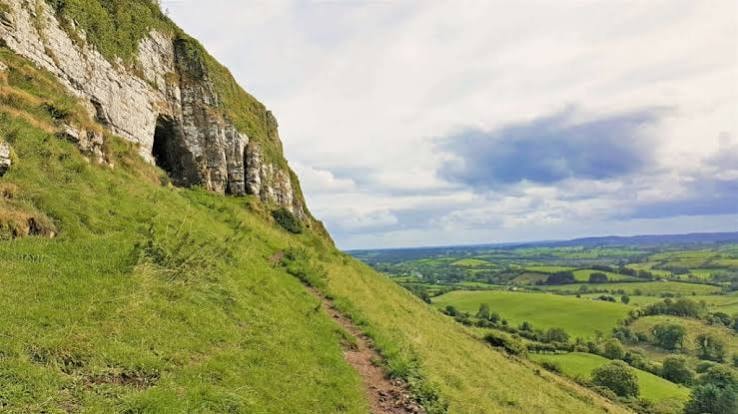
The official Keash Hill Trail is approximately 3.4 kilometres and takes around one hour — though we'd allow 1½ hours. It's graded strenuous. That might surprise you when you first look at the distance, but the climb towards the caves becomes quite steep, and sections can be slippery after rain. The route begins near St Kevin's Church, follows the road beneath Keshcorran Mountain, passes through a kissing gate, crosses the field, and then begins the climb towards the caves. Red arrows mark the route, and steps have been installed along sections of the ascent.
One important thing to know: although there are 17 caves, the official marked Keash Hill Trail ends at the first cave. For safety reasons, the designated trail doesn't take you through all 17. The terrain around the caves and higher sections of the mountain becomes considerably more challenging beyond the first cave. You can have an excellent visit by following the official route, enjoying the first cave, and taking in the views.
Then there's the reward for climbing. Turn around. The views from the caves across the surrounding countryside are fantastic — on a clear day, you can see far across the patchwork of fields and hills below. And because you're looking out from the dark entrance of a limestone cave, you've got a natural frame for photographs. It's one of those places where the view feels much bigger than you expected when you started walking.
The Caves of Keash are completely free to visit. There are no tickets to purchase and no visitor centre entrance fee. That makes this another excellent free outdoor attraction in County Sligo. If you're exploring this part of the northwest, the caves pair beautifully with a visit to Glencar Waterfall in nearby County Leitrim, or with the dramatic landscape of the Devil's Chimney at Glencar — both are within easy reach and make for an excellent day of Sligo and Leitrim exploration.
And if ancient Ireland interests you, the Caves of Keash sit remarkably close to one of the country's most extraordinary prehistoric landscapes. The Carrowkeel Passage Tombs in the Bricklieve Mountains are a collection of 14 Neolithic cairns constructed more than 5,000 years ago — older than the Egyptian pyramids. Combining Keash and Carrowkeel gives you mythology, archaeology and ancient history all within the same part of County Sligo.
Best Time to Visit
The ideal visit is on a dry, clear day after a spell of reasonably settled weather — you'll have better conditions underfoot and clearer views. Spring, summer and early autumn give you longer daylight hours, and early morning can be particularly peaceful. If there has been heavy rain, expect the steep sections to be slippery. In poor visibility, you lose one of the biggest rewards of the walk — the panoramic views across County Sligo. The caves are open year-round and free at all times.
Getting There
The Caves of Keash are located on Keshcorran Mountain near Keash in County Sligo, approximately 7–8 kilometres from Ballymote. From Ballymote, follow the R295 towards Boyle for approximately 7.5 kilometres before turning left just before the Eastern Harps GAA grounds. Continue towards St Kevin's Church, where roadside parking is available. Park considerately and avoid blocking entrances or local access. From the church, the route follows the public road before reaching the entrance to the walking trail. Sligo town is approximately 30 kilometres to the north.
Insider Tips
Don't judge this walk by the distance. At around 3.4km, it looks easy on paper. The steep section approaching the caves is what makes the difference, particularly when the ground is wet. Wear proper walking boots — smooth-soled shoes are not suitable here.
The official trail ends at the first cave. Don't assume you're supposed to scramble from one cave to another across the hillside — the terrain beyond the first cave becomes considerably more challenging and the marked trail doesn't continue there.
Once you reach the first cave, turn around before doing anything else. The view across the Sligo countryside is one of the best parts of the entire experience — give yourself a few minutes to sit and enjoy it before heading back down.
Take even more care on the descent than the ascent. Descending a wet grassy slope can sometimes be trickier than climbing it. Take your time and use the installed steps where available.
Combine the Caves of Keash with Ballymote Castle and the Carrowkeel Passage Tombs for a fantastic full day through Sligo's mythology, archaeology and medieval history. And if you're heading south towards Roscommon,
Lough Key Forest Park is only a short drive from Boyle and makes an excellent addition to the day.
If you're spending time in Sligo town before or after your visit, Thomas Connolly's pub on Markievicz Road is one of the finest traditional pubs in the northwest — a proper Victorian bar with great atmosphere and regular traditional music sessions.
Highlights
Quick Facts
County
County Sligo
Region
West
Category
Heritage


Keep exploring